


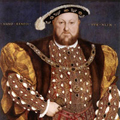


Aside from President Lincoln, the most prominent personality on the northern side during the latter part of the Civil War was General Ulysses S. Grant. His successes in the Mississippi Valley in the early days of the war, when success was none too common, his capture of Vicksburg at the turning point of the conflict, and his dogged drive toward Richmond had established his military reputation. When the drive toward Richmond resulted at last in the capture of Lee's army and its surrender at Appomattox, the victorious North turned with gratitude to Grant and made him a popular idol, while the politicians began to question whether his popularity might not be put to account in the field of politics.
Grant himself had never paid any attention to matters of government. In only one presidential election had he so much as voted for a candidate, and then it was for a Democrat, James Buchanan. In 1860 he was prevented from voting for Senator Stephen A. Douglas and against Abraham Lincoln only by the fact that he had not fulfilled the residence requirement for suffrage in the town where he was living. Nevertheless in his capacity as general of the army his headquarters after the war were in Washington and his duties brought him into contact with the politicians and eventually entangled him in the controversy between the President and Congress. Circumstances at first threw him into close association with Johnson, but at the time of the Stanton episode late in 1867 a misunderstanding arose between them which developed into a question of veracity, and then into open hostility. The opponents of the President took up the General's case with alacrity and from then on the popular hero was looked upon as the inevitable choice for the next Republican nomination.
The convention of the National Union Republican Party, as it was called at that time, was held in Chicago, May 20, 1868, during the interval between the votes on the eleventh and second charges of the impeachment of President Johnson. General Grant was unanimously nominated for the presidency and Schuyler Colfax, Speaker of the House of Representatives, for the second place on the ticket. The platform portrayed the benefits of radical reconstruction and defended negro suffrage in the South. In the North at that time the black was commonly denied the vote - the Fifteenth Amendment having not yet been ratified - and the convention accordingly declared that the question of suffrage in all the "loyal" states properly belonged in the states themselves. Other planks asserted that the public debt ought to be paid in full, that pensions for the veterans were an obligation and that immigration ought to be encouraged. The administration of President Johnson was denounced and the thirty-five senators who voted for his conviction in the impeachment trial were commended.
The Democrats met at Tammany Hall in New York on July 4. Their platform approved the pension laws, advocated the sale of public land to actual occupants, praised the administration of President Johnson, arraigned the radicals and declared the reconstruction acts "unconstitutional, revolutionary, and void." If the radical party should win in the election, the Democrats asserted, the result would be "a subjected and conquered people, amid the ruins of liberty and the scattered fragments of the Constitution." The regulation of the suffrage, one plank declared, had always been in the hands of the individual states. The most prominent place in the platform, however, was given to the question of the public debt. Part of the bonds issued during the war had, by acts of Congress, been made payable in "dollars," a word which might mean either paper dollars or gold dollars. Paper, however, was much less valuable than gold, times were hard, and many people held the opinion that the debt could properly be paid in paper. Such was the "Ohio idea," which was made part of the Democratic platform.
The choice of a candidate required twenty-two ballots. Early trials indicated the strength of George H. Pendleton, popularly known as "Gentleman George" and the chief exponent of the "Ohio idea." Johnson also had support. Chief Justice Salmon P. Chase, having failed to obtain the Republican nomination, allowed it to be known that he was willing to become the Democratic candidate. At length, on the twenty-second ballot, a few votes were cast for Governor Horatio Seymour of New York, the chairman of the convention. The move met with enthusiastic approval, despite Seymour's insistence that he would not be a candidate, and he was unanimously chosen.
The developments of the campaign depended largely upon occurrences in the South. Military reconstruction had not been wholly completed in Virginia, Mississippi, Texas and Georgia. The last of these states had once been readmitted to the Union, but had immediately expelled the negro members of its legislature, and was thereupon placed again under military rule. The Ku Klux Klan was meanwhile in general operation throughout the South and its activities, both real and imaginary, received wide advertisement in the North. Public interest, therefore, in the underlying issues of the campaign centered upon the attitude of the candidates toward the southern question. General Grant was understood to be with the radicals and Seymour with the conservatives. The result of the election was the choice of the Republican leader by an apparently large majority. He carried twenty-six out of thirty-four states, with 214 out of 294 electoral votes, but he received a popular majority of only 300,000. Examination of the returns indicated a strong conservative minority in many of the solid Republican states. The strength of the radicals in the South, moreover, was due, in the main, to negro-carpetbag domination, and when these states should become conservative, as they were sure to do, the political parties would be almost evenly divided.[1]
The man who was now entering upon his first experience as the holder of an elective office had risen from obscurity to public favor in the space of a few years. Although a graduate of West Point, with eleven years of military experience afterward, his career before 1861 had been hardly more than a failure. He had left the army in 1854 rather than stand trial on a charge of drunkenness; had grubbed a scanty living out of "Hard Scrabble," a farm in Missouri; had tried his hand at real estate, acted as clerk in a custom-house and worked in a leather store at $800 a year. Then came the war, and in less than three years Grant had received the title of Lieutenant-General, which only Washington had borne before him, and had become General-in-Chief of all the armies of the United States. Always an uncommunicative man, he kept his own counsel during the interval between his election and his inauguration. He saw few politicians, asked no advice about his cabinet, sought no assistance in preparing his inaugural address and made no suggestions to the leaders of his party concerning legislation that he would like to see passed. His first act, the appointment of his cabinet, caused a gasp of surprise and dismay. Most of the men named were but little known and some of them were not aware that they were being chosen until the list was made public. The Secretary of State, Elihu Washburne, was a close personal friend, and was appointed merely that he might hold the position long enough to enjoy the title and then retire. He was succeeded by Hamilton Fish, of New York, who proved to be a wise choice. The Secretary of the Treasury was A.T. Stewart, a rich merchant of New York, but he had to withdraw on account of a law forbidding any person "interested in carrying on the business of trade or commerce" to hold the office. The Secretary of the Navy, A.E. Borie, was a rich invalid of Philadelphia, who had almost no qualifications for his office and resigned at once. Better appointments were former Governor J.D. Cox, of Ohio, as Secretary of the Interior, and Judge E.R. Hoar, of Massachusetts, as Attorney-General.
When the Congress elected with Grant assembled in 1869 its first act was a measure providing for the payment of the public debt in coin. Part of the Tenure of Office Act was repealed, the President having indicated his opposition to it. On the southern question General Grant had earlier inclined toward moderation, but radical counsels and the logic of events led him to join Congress in the passage of the enforcement act and the Ku Klux Act, both of which have already been mentioned.
It was during this, the first year of Grant's administration, that there occurred the famous gold conspiracy of 1869. Jay Gould and James Fisk, Jr., two of the most unscrupulous stock gamblers of the time, determined to corner the supply of gold and then run its market price up to a high level, in order to further certain interests which they had recently purchased. The likelihood that the conspirators could carry out the plan depended largely on the Secretary of the Treasury, George S. Boutwell, who was accustomed to sell several millions of dollars' worth of gold each month. If the sales could be stopped Gould and Fisk might be successful. Accordingly, they got on friendly terms with the President through cultivating the acquaintance of his brother-in-law, were seen publicly with him at the theatre and other places, and subsequently he wrote to the Secretary expressing his opinion that the sales had better stop. Gould apparently was informed of this decision by the brother-in-law, even before the message reached the Secretary, and immediately bought up so much gold as to run the price to an unparalleled figure. This was on "Black Friday," September 24. The Secretary became alarmed, rumors were abroad that the administration was implicated in the conspiracy, and at noon, after consultation with the President, he decided to place four millions in gold on the market. At once the price dropped, brokers went bankrupt, and Gould and Fisk had to take refuge behind armed guards to save their lives. The President had not been a party to the plans of the speculators, but his blindness to their real purposes and his association with them during the period when their scheme was being perfected made him a target for all manner of accusations.
Further astonishment was caused by the attitude of the President toward two of the three really able men in his cabinet. In June, 1870, he suddenly called for the resignation of Judge Hoar. It appeared that he was seeking votes in the Senate for a treaty in which he was interested and that certain southern members demanded the post of attorney-general for a southern man in return for their support. Secretary Cox's resignation came soon afterward. He had taken his department out of politics, had furthered the cause of civil service reform and had protected his employees from political party assessments. These acts brought him into collision with the politicians, who had the ear of the President, and Cox had to retire. Both Hoar and Cox were succeeded by mediocre men.
The treaty which caused the removal of Secretary Hoar was one that the President had arranged providing for the annexation of San Domingo. The Senate was opposed to ratification, but General Grant was accustomed to overcoming difficulties and he urged his case with all the power at his command. One result was an unseemly wrangle between the President and Senator Charles Sumner over the latter's refusal to support ratification. General Grant, in resentment, procured the withdrawal of the Senator's friend, John Lothrop Motley from England, whither he had been sent as minister, and later the exclusion of Sumner from the chairmanship of the Committee on Foreign Relations, a post in which he had displayed great ability for ten years. Eventually the President had to give way on San Domingo, as the Senate did not agree with him in his estimate of its probable value.
In its conduct of our relations with England, on the other hand, the administration met with success and received popular approval. Ever since the war the people of the North had desired an opportunity to make Great Britain suffer for her attitude during that struggle. Senator Sumner struck a popular chord when he suggested that England should pay heavy damages on the ground that her encouragement of the South had prolonged the war. Specifically, however, the United States demanded reparation for destruction committed by the Alabama and other vessels that had been built in English ports. In 1870 Europe was in a state of apprehension on account of the Franco-Prussian War, and Secretary Fish seized the opportunity to press our claims upon England. The latter, meanwhile, had abated somewhat her earlier attitude of unwillingness to arbitrate, and Fish placed little emphasis on Senator Sumner's suggestions of a claim for indirect damages. The Treaty of Washington, signed and ratified in May, 1871, provided for the arbitration of the Alabama claims under such rules that a decision favorable to the American side of the case was made exceedingly probable. Each of five governments appointed a representative - the United States, Great Britain, Italy, Switzerland and Brazil. The meeting took place in Geneva and resulted favorably to the American demands. England was declared to have failed to preserve the proper attitude for a neutral during the war and was ordered in 1872 to make compensation in the amount of $15,500,000.
The United States had need of any feeling of national pride that might come as the result of the Geneva award, to offset the shame of domestic revelations, for one of the characteristics of the decade after the war was the wide-spread corruption in political and commercial life. One of the most flagrant examples was the Tweed Ring in New York. The government of that city was in the hands of a band of highwaymen, of whom William M. Tweed, the leader of Tammany Hall, was chief. Through the purchase of votes and the skilful distribution of the proceeds of their control, they managed to keep in power despite a growing suspicion that something was wrong. A favorite method of defrauding the city was to raise an account. One who had a bill against the city for $5,000 would be asked to present one for $55,000. When he did so, he would receive his $5,000 and the remainder would be divided among the members of the Ring. The plasterer, for example, who worked on the County Court House presented bills for nearly $3,000,000 in nine months. The New York Times and the cartoons of Thomas Nast in Harper's Weekly were the chief agents in arousing the people of the city to their situation. The former obtained and published proofs of the rascality of the Ring, mass meetings were held and an election in November, 1871, overturned Tweed and his associates. Some of them fled from the country, while Tweed himself died in jail.
More important both because of its effect on national politics and because of its influence on railway legislation for many years afterward was the Credit Mobilier scandal. The Credit Mobilier was a construction company composed of a selected group of stockholders of the Union Pacific Railroad, the transcontinental line which was being built between 1865 and 1869. In their capacity of railroad stockholders they awarded themselves as stockholders of the construction company the contract to build and equip a large part of the railway. The terms which they gave themselves were so generous as to insure a handsome profit. Chief among the members of the Credit Mobilier was Oakes Ames, a member of Congress from Massachusetts. Late in 1867 Ames became fearful of railroad legislation that was being introduced in Washington and he therefore decided to take steps to protect the enterprise. He was given 343 shares of Credit Mobilier stock, which he placed among members of Congress where, as he said, they would "do most good." Rumors concerning the nature of the transaction resulted finally in accusations in the New York Sun during 1872, which involved the names of many prominent politicians. Congressional committees were at once appointed to investigate the charges, and their reports caused genuine sensations. Ames was found guilty of selling stock at lower than face value in order to influence votes in Congress and was censured by the House of Representatives. The Vice-President, Schuyler Colfax, and several others were so entangled in the affair as to lose their reputations and retire from public life for good. Still others such as James A. Garfield were suspected of complicity and were placed for many years on the defensive.
Fear was wide-spread that political life in Washington was riddled with corruption. Corporations which were large and wealthy for that day were already getting a controlling grip on the legislatures of the states, and if the Credit Mobilier scandal were typical, had begun to reach out to Congress. Had the charges been made a little earlier they might have influenced the election of 1872, which turned largely on certain omissions and failings of the administration, and especially of General Grant himself.
There is something intensely pathetic in General Grant as President of the United States - this short, slouchy, taciturn, unostentatious man who was more at ease with men who talked horses than with men who talked government or literature; this President who was unacquainted with either the theory or the practice of politics, who consulted nobody in choosing his cabinet or writing his inaugural address, who had scarcely visited a state capital except to capture it and had been elected to the executive chair in times that were to try men's souls. An indolent man, he called himself, but the world knew that he was tireless and irresistible on the field when necessity demanded, persistent, imperturbable, simple and direct in his language, and upright in his character. The tragedy of President Grant's career was his choice of friends and advisors. In Congress he followed the counsels of second-rate men who gave him second-rate advice; outside he associated too frequently with questionable characters who cleverly used him as a mask for schemes that were an insult to his integrity, but which his lack of experience and his utter inability to judge character kept hidden from his view. Honorable himself and loyal to a fault to his friends, he believed in the honesty of men who betrayed him, long after the rest of the world had discovered what they were. He could accept costly gifts from admirers and appoint these same men to offices, without dreaming that their generosity had sprung from any motive except gratitude for his services during the war.[2]
It was inevitable, in view of these facts, that the presidential campaign of 1872 should be essentially an anti-Grant movement, but its particular characteristics had their origin before the General's first election. In 1865 a constitutional convention in Missouri had deprived southern sympathizers of the right to vote and hold office. A wing of the Republican party, led by Colonel B. Gratz Brown, had begun a counter-movement, intended to remove the restrictions on the southerners, and also to reform other abuses in the state. Colonel Brown had early received the assistance of General Carl Schurz, a man of ability with the temperament of a reformer. The Brown-Schurz faction had quickly increased in numbers, had become known as the Liberal Republican party and had attracted such interest throughout the country that a national conference was called for May, 1872, at Cincinnati. In adopting a conciliatory southern policy, the Liberal Republicans became opposed to the President, who had by this time become thoroughly committed to the radical program. Other critics of the administration, mainly Republicans, became interested in the Liberal revolt - those who deprecated the President's choice of associates and advisors, the civil service reformers who were aroused by the dismissal of Secretaries Hoar and Cox, and the tariff reformers who had vainly attempted to arouse enthusiasm for their plans.
On account of the varied character of the elements which composed it and the independent spirit of its members, the Cincinnati assembly resembled a mass meeting rather than a well-organized political conference. It numbered among its members, nevertheless, many men of influence and repute. Some of the most powerful newspaper editors of the country, also, were friendly to its purpose, so that it seemed likely to be a decisive factor in the coming campaign. In most respects the platform reflected the anti-Grant character of the convention. It condemned the administration for keeping unworthy men in power, favored the removal of all disabilities imposed on southerners because of the rebellion, objected to interference by the federal government in local affairs - a reference to the use of troops to enforce the radical reconstruction policy - and advocated civil service reform. The convention found difficulty in stating its attitude toward the tariff question. It was deemed necessary to get the support of Horace Greeley, the editor of the New York Tribune, the most powerful northern newspaper of Civil War times, but Greeley was an avowed protectionist. The platform, therefore, evaded the issue by referring it to the people in their congressional districts, and to Congress. But the rock on which the movement met shipwreck was the nomination of a candidate. Many able men were available - Charles Francis Adams, who had been minister to England, Senator Lyman Trumbull, B. Gratz Brown and Judge David Davis of the Supreme Court. Any one of them would have made a strong candidate. The convention, however, passed over all of them and nominated Greeley, long known as being against tariff reform, against civil service reform and hostile to the Democrats, whose support must be obtained in order to achieve success. Although a journalist of great influence and capacity, Greeley was an erratic individual, whose appearance and manner were the joy of the cartoonist.
The Republican convention met on June 5, and unanimously re-nominated Grant. The platform recited the achievements of the party since 1861, urged the reform of the civil service, advocated import duties and approved of the enforcement acts and amnesty.
To the Democrats the greatest likelihood of success seemed to lie in the adoption of the Liberal Republican nominee and platform. Such a course, to be sure, would commit them to a candidate who had excoriated their party for years in his newspaper, and to the three war amendments to the Constitution, which the Liberal Republicans had accepted. Yet it promised the South relief from military enforcement of obnoxious laws, and that was worth much. Both Greeley and his platform were accordingly accepted.
The enthusiasm for the Liberal movement which was observable at the opening of the campaign rapidly dwindled as the significance of the nomination became more clear. Greeley was open to attack from too many quarters. The cartoons of Nast in Harper's Weekly, especially, held him up to merciless ridicule. In the end he was defeated by 750,000 votes in a total of six and a half million, a disaster which, together with the death of his wife and the overwork of the campaign resulted in his death shortly after the election. As for the Republicans they elected not only their candidate but also a sufficient majority in Congress to carry out any program that the party might desire.
On March 3, 1873, as Grant's first term was drawing to a close, Congress passed a measure increasing the salary of public officials from the President to the members of the House of Representatives. The increase for Congressmen was made retroactive, so that each of them would receive $5,000 for the two years just past. To a country whose fears and suspicions had been aroused by the Credit Mobilier scandal, the "salary grab" and the "back pay steal" were fresh indications that corruption was entrenched in Washington. Senators and Representatives began at once to hear from their constituencies. Many of them returned the increase to the treasury and when the next session opened, the law was repealed except so far as it applied to the president and the justices of the Supreme Court.
The congressional elections of 1874 indicated the extent of the popular distrust of the administration. In New York, where Samuel J. Tilden was chosen governor, and in such Republican strongholds as Massachusetts and Pennsylvania the Democrats were successful. In the House of Representatives the Republican two-thirds majority was wiped out and the Democrats given complete control. Even the redoubtable Benjamin F. Butler lost his seat.
Further apprehensions were aroused by rumors concerning the operations of a "Whiskey Ring." For some years it had been suspected that a ring of revenue officials with accomplices in Washington were in collusion with the distillers to defraud the government of the lawful tax on whiskey. Part of the illegal gains were said to have gone into the campaign fund for Grant's re-election, although he was ignorant of the source of the revenue. Benjamin H. Bristow, who became Secretary of the Treasury in 1874, began the attempt to stop the frauds and capture the guilty parties. This was no simple task, because information of impending action was surreptitiously sent out by officials in Washington. Finally Secretary Bristow got the information which he sought, and then moved to capture the criminals. One of the most prominent members of the Ring was an internal revenue official in St. Louis who, it was recollected, had entertained President Grant, had presented him with a pair of horses and a wagon, and had given the General's private secretary a diamond shirt-stud valued at $2,400. Public opinion was yet further shocked, however, when the trail of indictments led to the President's private secretary, General Babcock. On first receiving the news of Bristow's discoveries, Grant had written "Let no guilty man escape"; but later he became secretly and then openly hostile to the investigation. During the trial of Babcock, the President asked to be a witness in his behalf. A verdict of acquittal was given, but afterwards the two men had a private conference, and when "Grant came out, his face was set in silence." Babcock never returned to the White House as Secretary, but was given the post of Superintendent of Public Buildings and Grounds. Several of the members of the Ring were imprisoned but were later pardoned by the President. In the meanwhile Grant seems to have been brought to believe that Bristow was persecuting Babcock with a view to getting the favor of the reform element in the party and eventually the presidential nomination. Relations between the two became strained and Bristow resigned.
The last year of Grant's second administration was blackened by the case of W.W. Belknap, who was then Secretary of War. Investigation by a House committee uncovered the fact that since 1870 an employee in the Indian service had paid $12,000 and later $6,000 a year for the privilege of retaining his office. The money had been paid at first to Mrs. Belknap, who had made the arrangement, and after her death to the Secretary himself. The House unanimously voted to impeach him, but on the day when the vote was taken he resigned and the President accepted the resignation. Only the fact that he was out of office prevented the Senate from declaring him guilty, and critics of the administration noted that the President had saved another friend from deserved punishment.
It would be easy to over-estimate the responsibility of General Grant for the political corruption of his administrations. For the most part the wrong-doing of the time began before his first election. Democrats as well as Republicans participated in many of the scandals. Politicians in the cities, the states and the nation seemed to be determined to have a share in the enormous wealth that was being created in America, and they got it by means that varied from the merely unethical and indiscreet, to the openly corrupt. As for the President, his own defence, given in his last message to Congress, may be taken as the best one: "Failures have been errors of judgment, not of intent."
Under the circumstances, however, it was natural that the presidential campaign of 1876 should turn upon the failings of the administration. Popular interest in the southern issue was on the wane. Early in the election year, nevertheless, James G. Blaine, Republican leader in the House, made a forceful attack on Jefferson Davis, as the wilful author of the "gigantic murders and crimes at Andersonville," the southern prison in which federal captives had been held. Instantly the sectional hatred flared up and Blaine, already a well-known leader, became a prominent candidate for the nomination. Republican reformers generally favored Bristow. A third-term boom for Grant was effectively crushed by an adverse resolution in the House.
The Republican nominating convention met on June 14. The virtues of Blaine were set forth in a famous speech by Robert G. Ingersoll in which he referred to the attack on Davis: "Like an armed warrior, like a plumed knight James G. Blaine marched down the halls of the American Congress and threw his shining lance full and fair against the brazen forehead of every traitor to his country." The "plumed knight," however, was open to attack concerning a scandal during the Grant regime, and the convention turned to Governor Rutherford B. Hayes, of Ohio, a man of quiet ability who had been unconnected with Washington politics, was relatively unknown and, therefore, not handicapped by the antagonisms of previous opponents. The platform emphasized the services of the party during the war, touched lightly on the events of the preceding eight years, advocated payment of the public debt, and favored import duties and the reform of the civil service.
The Democrats met on June 27. There was little opposition to the nomination of Governor Samuel J. Tilden, of New York, a wealthy lawyer who had made a record as a reformer in opposition to "Boss" Tweed and a corrupt canal ring. The platform was distinctly a reform document. It demanded reform in the governments of states and nation, in the currency system, the tariff, the scale of public expense, and the civil service. An eloquent paragraph exhibited those corruptions of the administration which had caused such general dismay.
There was little in the campaign that was distinctive, and on November 8, the morning after the election, it seemed clear that Tilden had been successful. He had carried the doubtful states of Connecticut, New York, New Jersey and Indiana. When the figures were all gathered, it was found that his popular vote exceeded that of his rival by more than 250,000. But there were disputes in three states, Florida, Louisiana and South Carolina. Hayes would be elected only if the electoral votes of all these states could be obtained for him. If, however, Tilden received even one electoral vote from any of the states, the victory would be his. Hayes was conceded 166 electoral votes; Tilden 184. Nineteen were in dispute. The Republican leaders at once claimed the nineteen disputed votes, and asserted that their candidate was elected. The Democrats had no doubt of the victory of Tilden.[3] The capitals of the three doubtful states now became the centers of observation. Troops had long been stationed in South Carolina and Louisiana, and others were promptly sent to Florida. Prominent politicians from both parties also flocked thither, in order to uphold the party interests.
In South Carolina it became evident that a majority of the popular vote was for Hayes, although both the Democratic and the Republican electors sent in returns to Washington. In Florida there was a board of canvassers which had power to exclude false or fraudulent votes. It was composed of two Republicans and one Democrat. When all ballots had been sent in, the Democrats claimed a majority of ninety; the Republicans a majority of forty-five. The board went over the returns and by a partisan vote threw out enough to make the Republican majority 924. Republican electoral votes were thereupon sent to Washington, but so also were Democratic votes. The situation in Louisiana was still more complicated. Political corruption and intimidation had been commonplaces in that state. On the face of the returns, Tilden's electors had received majorities varying from 6,000 to 9,000. As in Florida there was a board of canvassers which was here composed of four Republicans, three of whom were men of low character. The vote of the state was offered to the Democrats, once for $1,000,000 and once for $200,000, but the offer was not taken. The board then threw out enough ballots to choose all the Hayes electors. As in the other cases, Democratic electors also sent ballots to Washington.
There was no federal agency with power to determine which sets of electors were to be counted, and the fact that the federal Senate was Republican and the House Democratic seemed to preclude the possibility of legislation on the subject. No such critical situation had ever resulted from an election, and a means of settlement must quickly be discovered, for only three months would elapse after the electoral votes were sent to Washington, before the term of General Grant would expire. The means devised was the Electoral Commission. This body was to be composed of five senators, five representatives, and five justices of the Supreme Court. The Senate and the House were each to choose their five members, and four members of the Court were designated by the Act which established the Commission, with power to choose a fifth. It was understood that seven would be Republicans, seven Democrats and that the fifteenth member would be Justice David Davis, an Independent, who would be selected by his four colleagues. On him in all probability, the burden of the decision would fall. On the day when the Senate agreed to the plan, however, the Democrats and Independents in the Illinois legislature chose Justice Davis as United States Senator and under these circumstances he refused to serve on the Commission. It was too late to withdraw, and since all the remaining justices from whom a commissioner must be chosen were Republicans, the Democrats were compelled to accept a body on which they were outnumbered eight to seven.
The Electoral Commission sat all through the month of February, 1877. Its decisions were uniformly in favor of Hayes electors by a vote of eight to seven, always along party lines, and on March 2, it was formally announced that Hayes had been elected. The disappointment of the Democrats was bitter and lasting, for their candidate had received over a quarter of a million popular votes more than his opponent, and yet had been declared defeated. For a time there was some fear of civil war. Tilden, however, accepted the decision of the Commission in good faith, and forbade his friends and his party to resist. Moreover, close friends of the Republican candidate assured southern Democratic politicians that Hayes if elected would adopt a conciliatory policy toward the South, and would allow the southern states to govern themselves unhampered by federal interference. Peaceful counsels prevailed, therefore, and the closing days of President Grant's administration were undisturbed by threats of strife.
The question whether Hayes was fairly elected is a fascinating one. There is no doubt that there was fraud and intimidation on both sides, in the disputed states. In Louisiana, for example, the Democrats prevented many negroes from voting by outrageous intimidation, while the Republicans had many negroes fraudulently registered. Little is known, also, of the activities of the "visiting statesmen," as those politicians were called who went to the South to care for their party interests. It is known that they were well provided with money and that the boards of canvassers contained many unscrupulous men. Nor is it likely that politicians who lived in the days of the Credit Mobilier and the Whiskey King would falter at a bargain which would affect the election of a president. Republicans looked upon the Democrats as being so wicked that they were justified in "fighting the devil with fire." Democrats looked upon the election as so clearly theirs that no objection ought to be made to their taking what belonged to them. It seems certain, however, that Hayes had no hand in any bargains made by his supporters. As for Tilden, his wealth was such that he could have purchased votes if he had desired to do so, and the fact that all the votes went to his rival indicates that he did not yield to the temptation. Moreover, one of his closest associates, Henry Watterson, the journalist, tells of one occasion when the presidency was offered to Tilden and refused by him. Perhaps a definitive statement of the rights and wrongs of this famous election will never be made; for one after another the men most intimately associated with it have died leaving some account of their activities, but none of them has told much more than was already known.
BIBLIOGRAPHICAL NOTE
Dunning, Rhodes and Schouler, together with most of the works referred to at the close of Chapter 1, continue to be useful. L.A. Coolidge, Ulysses S. Grant (1917), is not as partisan as most of the biographies of the time and is valuable despite a lack of a thorough understanding of the period. The following are valuable for especial topics: H. Adams, Historical Essays (1891); C.F. Adams, Jr., and H. Adams, Chapters of Erie (1886), (gold conspiracy); C.F. Adams, Jr., Charles Francis Adams (Treaty of Washington); C.F. Adams, Jr., "The Treaty of Washington" in Lee at Appomattox, and Other Papers (1902); James Bryce, American Commonwealth (vol. II, various editions since 1888, contains famous chapter on the Tammany Tweed ring); A.B. Paine, Thomas Nast, His Period and His Pictures (1904), (Tweed ring). P.L. Haworth, Hayes-Tilden Disputed Presidential Election of 1876 (1906), is a thorough study; on this election, see also John Bigelow, The Life of S.J. Tilden (2 vols., 1895), and C.R. Williams, Life of Rutherford B. Hayes (2 vols., 1914).
* * * * *
[1] The closing months of Johnson's administration found him almost in a state of isolation. The incoming President refused to have any social relations with him, or even to ride with him from the White House to the Capitol on inauguration day. After the installation of his successor, Johnson returned to Tennessee but was later chosen to the Senate, where he served but a short time before his death.
[2] In 1884, a year before his death, the dishonesty of a trusted friend left him bankrupt, while a painful and malignant disease began slowly to eat away his life. Nevertheless, with characteristic courage he set himself to the task of dictating his Memoirs, or more often penciling sentences when he was unable to speak, in order that he might repay his debts with the proceeds.
[3] There was also a technical question concerning one elector in Oregon, which was easily settled.