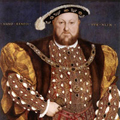
John Bach McMaster

LIFE AT JAMESTOWN. - The colonists who landed at Jamestown in 1607 were all men. While some of them were building a fort, Captain Newport, with Captain John Smith and others, explored the James River and visited the Powhatan, chief of a neighboring tribe of Indians. This done, Newport returned to England (June, 1607) with his three ships, leaving one hundred and five colonists to begin a struggle for life. Bad water, fever, hard labor, the intense heat of an American summer, and the scarcity of food caused such sickness that by September more than half the colonists were dead.

TRADE, COMMERCE, AND THE FISHERIES. - The treaty of 1814 did not end our troubles with Great Britain. Our ships were still shut out of her West Indian ports. The fort at Astoria, near the mouth of the Columbia River, had been seized during the war and for a time was not returned as the treaty required. The authorities in Nova Scotia claimed that we no longer had a right to fish in British waters, and seized our fishing vessels or drove them from the fishing grounds. We had no trade treaty with Great Britain.

NEW ENGLAND NAMED. - While the London Company was planting its colony on the James River, the Plymouth Company sought to retrieve its failure on the Kennebec (p. 39). In 1614 Captain John Smith, who had returned to England from Jamestown, was sent over with two ships to explore. He made a map of the coast from Maine to Cape Cod, [1] and called the country New England.

THE PARTY ISSUES. - The issues which divided the Federalists and the Republicans from 1793 to 1815 arose chiefly from our foreign relations. Neutrality, French decrees, British orders in council, search, impressment, the embargo, non-intercourse, the war, were the matters that concerned the people. Soon after 1815 all this changed; Napoleon was a prisoner at St. Helena, Europe was at peace, and domestic issues began to be more important.

THE COMING OF THE DUTCH. - We have now seen how English colonies were planted in the lands about Chesapeake Bay, and in New England. Into the country lying between, there came in 1609 an intruder in the form of a little Dutch ship called the Half-Moon. The Dutch East India Company had fitted her out and sent Captain Henry Hudson in her to seek a northeasterly passage to China. Driven back by ice in his attempt to sail north of Europe, Hudson turned westward, and came at last to Delaware Bay.

In many respects the election of Jackson [1] was an event of as much political importance as was the election of Jefferson. Men hailed it as another great uprising of the people, as another triumph of democracy. They acted as if the country had been delivered from impending evil, and hurried by thousands to Washington to see the hero inaugurated and the era of promised reform opened. [2]

GROUPS OF COLONIES. - It has long been customary to group the colonies in two ways - according to their geographical location, and according to their form of government.

Geographically considered, there were three groups: (1) the Eastern Colonies, or New England - New Hampshire, Massachusetts (including Plymouth and Maine), Rhode Island, and Connecticut; (2) the Middle Colonies - New York, New Jersey, Pennsylvania, and Delaware; and (3) the Southern Colonies - Maryland, Virginia, North and South Carolina, and Georgia. (Map, p. 134.)

Wherever the early explorers and settlers touched our coast, they found the country sparsely inhabited by a race of men they called Indians. These people, like their descendants now living in the West, were a race with copper-colored skins, straight, jet-black hair, black eyes, beardless faces, and high cheek bones.

POPULATION. - When Harrison was elected in 1840, the population of our country was 17,000,000, spread over twenty-six states and three territories. Of these millions several hundred thousand had come from the Old World. No records of such arrivals were kept before 1820; since that date careful records have been made, and from them it appears that between 1820 and 1840 about 750,000 immigrants came to our shores. They were chiefly from Ireland, England, and Germany. [1]

While English, Dutch, and Swedes were settling on the Atlantic seaboard of North America, the French took possession of the St. Lawrence, the Great Lakes, and the Mississippi. Though the attempt of Cartier to plant a colony on the St. Lawrence failed (p. 30), the French never lost interest in that part of the world, and new attempts were made to plant colonies.

Syndicate content