




[Europe in 1509]
Roughly speaking, the forty years preceding the accession of Henry VIII. had witnessed the birth of modern Europe. The old feudal conception of Christendom had passed away: the modern conception of organic States had taken its place. The English Kings had for some time ceased to hold sway in France, whether as claimants to the throne or as great feudatories. France herself had become a united and aggressive nation; the fusion of the Spanish monarchies was almost completed: the Emperor was no longer regarded as the titular secular head of Christendom, but was virtually the chief of a loose Germanic confederation. The Turk, finally established in Eastern Europe, was shortly to find himself regarded as a possible ally of Christian Powers; Christendom still reckoned the Pope as its spiritual head, but the cataclysm was already preparing; and the enterprise of daring seamen had but just rent the veils that had hidden from the nations of Europe the boundless possibilities of a new world in the West and an ancient world in the East, converting the pathless ocean into the great Highway.
[England's position in Europe]
Since the death of the conqueror Henry V., England herself had been rent and torn by internal broils. For many a long year she had taken but little share in the affairs of Europe. But it had been the part of the first Tudor King to win for her breathing time; to secure a period for rest and internal recuperation, which should fit her to hold her own in the counsels of Europe should her interests demand it. The civil broils were ended; trade had revived; wealth had been accumulating. Henry had not sought military glory, but he had played the game of diplomacy with acuteness and finesse. When he ascended the throne, the princes of Europe had regarded England as a Power that might safely be neglected unless she could be used as a cat's-paw; but before he died they had learned that they could no longer negotiate with him except on equal terms. In a sense, perhaps, it is true that England was still reckoned as no more than a third-rate [Footnote: Cf. Brewer, Reign of Henry VIII., i., p.3; Creighton, Wolsey, p. 11. The estimate, however, seems to be rather the outcome of an inclination to magnify Wolsey's achievement.] power, since her military prestige had fallen and the chances of its restoration were untested, while her interests would not naturally lead her into active participation in European complications; but she had at least achieved sufficient importance for the Powers to desire her favour rather than her ill-will, and for herself to be able to put a price on her support when it was asked.
[The new King]
So far, however, it was rather respect for the personal ability of Henry VII. than a high estimate of the English nation that had secured the English position; and when the astute old monarch was succeeded on the throne by a frank, high-spirited lad of eighteen, the Princes of Europe flattered themselves that England would revert to the position of a cat's-paw. From this point of view the first beginnings of the reign were promising. Europe, however, was soon to be undeceived; to discover that the young King had an unfailing eye for a capable minister, a sincere devotion to his own interests, and an unparalleled power of reconciling the dictates of desire and conscience.
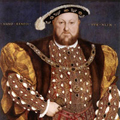
At home, circumstances combined to render Henry extraordinarily popular. Handsome, endowed with a magnificent physique, a first-rate performer in all manly exercises, gifted with many accomplishments, scholar enough to be proud of his scholarship, open of hand, frank and genial of manner, with a boyish delight in his endowments and a boyish enthusiasm for chivalric ideals, all English hearts rejoiced in his accession. The scholars looked forward to a Saturnian age; his martial ardour fired the hopes of the fighting men; the populace hailed with joy a King who began his rule by striking down the agents of extortion to whom he owed the wealth inherited from his economical sire. Henry in fact was blessed with the most valuable of all possessions for a ruler of men, a magnetic personality, which made his servants ready to go through fire and water, to stifle conscience, to forgo their own convictions at his bidding.
When he ascended the throne, however, none had the glimmering of a suspicion whither that imperious will was to direct the destinies of the nation: his earliest acts gave little indication of the later developments of his character and policy.
[1509 Marriage]
His first step was to complete the marriage with Katharine of Aragon, to whom he had been betrothed, under the papal dispensation, on the death of his elder brother, her husband. It is not without interest to note, in view of a plea put forward against the "divorce" in later years, that the bride was arrayed for the wedding as one who was not a widow but a maiden. Shortly afterwards Empson and Dudley, his father's unpopular agents, were brought to the block after attainder on a not very credible charge of treason, [Footnote: Brewer, i., p. 44; L. &P., i., 1212.] since the misdeeds of which they had been guilty could hardly be construed into capital offences.
Now, however, events on the Continent were to offer a field for Henry's ambitions, and incidentally to disillusion, at least in part, his young enthusiasms.
[The Powers: 1509-12]
The three great Powers - France, Spain, and the Empire - which had been evolved out of the mediaeval European system, were united in the desire of preventing Italy from following their example and consolidating into a nation. Venice, as the one Italian State strong enough to have some chance of combining the rest under her leadership, was the object not only of their jealousy but also of the Pope's. A few months before the death of Henry VII., these four combined in the League of Cambrai, for the dismemberment of Venice. The allies, however, were not guided in their actions by any altruistic motives - any excessive regard for the interests of their associates. The French King, Lewis XII., by prompt and skilful action, made himself master of the north of Italy before the rest were ready to move. This was by no means to the taste of Ferdinand or of Pope Julius; but as yet Maximilian had seen no reason to be displeased. Ferdinand would not risk a quarrel with Maximilian, which might have led to that monarch's interference in Castile on behalf of the boy Charles - his grandson as well as Ferdinand's - the nominal King of that portion of what Ferdinand looked on as his own dominions. So the crafty old King bided his time, dropping a quiet hint to young Henry in England that a moment might be approaching favourable to an English attack on France, in revival of the ancient claim to the crown, or at any rate to Guienne.
Henry, as yet unskilled in the tortuous diplomacy of his father-in-law, was well content to be guided by his advice. Ferdinand intrigued to unite Julius and Maximilian against France, and to shift the burden of battle, when it should come, off his own shoulders on to Henry's. Meantime, the outward professions to France remained of the most amicable character.
[1512 Dorset's expedition]
Then Lewis made a blunder which gave his enemies their opening. He called a General Council at Pisa which was in effect an attack on the spiritual authority of Rome. By the end of 1510, Julius was at open war with the French King; Ferdinand was in alliance with the Pope; in the course of the next year, the Holy League was formed; a combined attack was concerted; and in June, 1512, an English expedition, under the command of Lord Dorset, landed in Spain, on the theory that it was to be assisted by Ferdinand in the conquest of Guienne.
The expedition was a melancholy failure. The English troops and their commander were alike inexperienced in war; Ferdinand would not move against Guienne, urging with some plausibility that the securing of Navarre was a needful preliminary; the soldiers wanted beer and had to put up with Spanish wines; finally they insisted on returning to England, and Dorset had to put the best face he could on a very awkward situation. Officially it was announced that the withdrawal was made with Ferdinand's approval.
So far, the European anticipations of England's incapacity had been duly fulfilled. A military fiasco had accompanied an innocence of diplomatic guile which looked promising to the Continental rulers. But the promise was to be disappointed.
[Rise of Wolsey]
Henry VII. had avoided war and had been his own foreign minister; when he died, he left to form his son's Council some capable subordinates like Fox the Bishop of Winchester, but no one experienced in the responsibilities of control. Among the noble houses, the Howards were shortly to display at least a fair share of military capacity. But it was to a minister of at best middle-class origin, a rising ecclesiastic who had, however, hitherto held no office of the first rank, that England was to owe a surprisingly rapid promotion to European equality with the first-class Powers.
With that skill in selecting; invaluable servants which distinguished his entire career, Henry VIII. by the time he was one-and-twenty had already discovered in Thomas Wolsey the man on whose native genius and unlimited power of application he could place complete reliance.
Wolsey had been employed on diplomatic missions by the old King; whose methods he had gauged and whose policy he had assimilated, but only as a basis for far-reaching developments. He was brought into the Royal Council by Fox, partly no doubt in the hope that he would counteract the influence of Thomas Howard, Earl of Surrey, and others of the nobles who were martially inclined and imbued with a time-honoured hostility to France. It was no long time before he outshone his patron, who, however, had rightly judged his tendencies. Wolsey was no friend to war, and had no hostility to France, for the plain reason that he preferred diplomatic to military methods, and was quite as well pleased to advance English interests by alliance with France as by alliances against her if he saw his way to profit thereby. It is probable enough that he would have avoided the war with France if he had had the power; since he had not, he devoted his energies to making the war itself as successful as possible.
[1513 The French war]
The arrangements for the Guienne expedition had not unnaturally been singularly defective. Wolsey devoted himself with untiring zeal to the organisation of a new expedition in the following spring. Nothing was left to chance over which it was possible for one man's energy to exercise supervision. The first outcome was a naval engagement off Brest on 25th April, wherein the English admiral, Sir Edward Howard, restored at least the English reputation for valour, falling - overwhelmed by numbers - on the deck of the French flag-ship which he had boarded almost single-handed. The French fleet was much larger than that of the English, and the attack on it which he led was a desperate enterprise in which his ships were beaten off; but those who had jeered at the failure in Guienne were silenced, and Henry was enabled to land his troops undisturbed at Calais at the end of June. Both the King and Wolsey were with the army, and proceeded to lay siege, on 1st August, to Terouenne, which was partially re-victualled by the bold dash of a relief party of horsemen through the besieger's lines. Here the besiegers were shortly joined by a contingent under Maximilian (who professed himself a mere volunteer under the English King). The advancing French array was put to complete rout in the "battle of the Spurs" - the consequence of a sudden panic - and on August 22nd Terouenne surrendered. Tournai followed suit a month later.
In the meantime, events of moment had been taking place on the Scottish border.
[Scotland 1499-1513]
James IV., as we have seen, had by no means been on continuously good terms with Henry VII., and had lent a good deal more than merely moral support to the pretensions of Perkin Warbeck. At the close of the adventurer's active career in the end of 1497, a treaty was made between England and Scotland which was to remain in force till a year after the death of either monarch; and there were further treaties when James married Margaret Tudor in 1503. On the other hand, James had always maintained the traditional alliance with France, and in 1507 had declined the papal invitation to enter the league then formed to resist French aggression. Since the accession of Henry VIII., the relations between the two countries had been exceedingly strained. There were personal quarrels about jewels retained in England which James claimed for his wife. Scottish sea-captains had been treated as pirates by the English authorities. Henry, having joined the league against France, wished to patch up the quarrel with James; James, incited by the French, would not make friends with the active enemy of France; the French Queen sent him a message bidding him strike a blow on English ground as her knight. West, [Footnote: Brewer,Henry VIII., p.29. L &P., i., 1926, 3128, 3129, 3811, 3838, 3882.] the English ambassador, gives a highly uncomplimentary account of James's bearing at this time, but his evidence may be coloured. At any rate, there can have been little doubt in James's mind that a successful war with France would leave Henry ready to make himself extremely unpleasant to Scotland, even though he might not patently set the treaty aside; and for himself there was a degree of obligation to help France when she came to open hostilities with England; while Henry's instructions to West are hardly consistent with a character for stainless and unassailable honour. [Footnote: Cf. Lang, Hist. Scot., i., p.375; commenting on Brewer, Henry VIII., pp.28, 29 q.v.]
[1513 James invades England (Aug.)]
At any rate, the conclusion of the matter was that when Henry sailed for Calais, James soon made up his mind, with the support of most of the nobility, to declare war, and sent Henry his defiance - as he had promised West to do before opening hostilities. On 22nd August he was in England at the head of a great army; by the end of the month, Norham Castle, Ford, and other strongholds were in his hands. [Footnote: Cf. Lang, Hist. Scot., i., p. 377.] Thereafter, he entrenched himself on Flodden Ridge, and awaited the approach of the English army.
Queen Katharine and the Earl of Surrey had been left in charge at home when the King with Wolsey and Fox also crossed the channel. To the Queen's energy the successful results were in no small degree due, as well as to the military skill and audacity of the Howards, and to James's reckless disregard of strategical and tactical principles.
Had the Scottish monarch held to his plans, his campaign could hardly have failed to be successful. His army was large, and well victualled; his position on Flodden Edge was exceedingly strong; he had secured the fortresses which might otherwise have threatened him on flank or rear. His object was to entice the English commander, Surrey, away from his base, and force him to fight at a disadvantage, or to see his levies melt away, for lack of provisions. Surrey, advancing from Alnwick to Wooler, tried to inveigle him into descending from the Ridge to the open plain, but James was not to be tempted.
[Flodden (Sept.)]
Eastward of Flodden the Till flows north to join the Tweed. Surrey put the Till between himself and the Scottish army, and marched north, his movement masked by hills on his left, with the intention of reaching Berwick, or of threatening the Scottish communications. Arrived at Barmoor Wood, the Admiral, Thomas Howard, Surrey's son, proposed to march west, cross the Till, and move south again, threatening the rear of James's position. The operation, involving a very hard march, was carried out. The main army crossed at Twizel Mill, the rearguard fording the stream as high up as Sandyford; the junction being effected behind Branxton Marsh. The passage of the troops might easily have been prevented; but James, very inefficiently served in scouting, knew nothing of what was going on. When the approach of the English became known, he suddenly resolved to descend and give battle [Footnote: The traditions concerning the King and the old Earl of Angus on this occasion have been very untenderly handled by Mr. Andrew Lang, Hist. Scot., 1., p. 390.] on the plain, instead of remaining in his almost impregnable position. So on the afternoon of September 9th was fought the bloody and decisive battle of Flodden. Of the two armies, the Scottish was probably the larger; but the English captains had their troops better in hand than the border lords on the Scottish left, or the highland chiefs on their right. After fierce fighting, the Scottish wings were broken, and the Scottish centre was completely enveloped. There, headed by the King, fought the pick of the Scottish chivalry. The stand made was magnificent, the slaughter appalling. The English victory this time was one not of the bow - as so often before - but of the bill or axe against the spears in which the northern nation trusted. By hewing away the spear-heads, the English disabled their opponents; yet they fought on, till man by man they fell around their monarch. The King himself, brave as any man on the field, was slain; in the ring of his dead companions in arms were found the bodies of thirteen earls, three bishops, and many valiant lords. There were few families in Scotland which did not contribute to that hecatomb, whereof the memory is enshrined in the national song of lamentation, "The Flowers of the Forest".
[Effects of Flodden]
For many a long year the military power of Scotland was broken on the black day of Flodden. From that quarter Henry was to have no more serious fears. Great and decisive, however, as Surrey's [Footnote: Surrey was rewarded with the Dukedom of Norfolk, held by his father. Accordingly, after this he becomes "Norfolk," and his son Thomas becomes "Surrey". In 1524 the son succeeded to the Dukedom, and is the "Norfolk" of the latter half of the reign, the "Surrey" of its last years being his son Henry.] triumph was, the English also had paid a heavy price, and were unable to follow up victory by invasion. But Scotland had not only lost the best and bravest of her sons; the King's death left the Crown to a babe not eighteen months old, and the government of the country to the babe's mother, Margaret, the sister of Henry VIII., and to a group of nobles, to whose personal feuds and rivalries, constantly fomented by English diplomacy, the interests of the Scottish nation were completely subordinated.
[Recovery of English prestige]
The year 1513 had completely restored the reputation of the English arms. The sea-fight off Brest, the successes at Terouenne and Tournai, and, finally, the great victory of Flodden, proved beyond dispute that Englishmen only needed to be well led to show themselves as indomitable as ever they had been in the past. The march of 8th and 9th September immediately before Flodden was a feat which not many commanders would have cared to attempt, and few troops could have carried out. And it had become evident that generalship was not, after all, a lost art. It was now time for Europe to discover that England, habitually inferior to other nations in the arts of diplomacy, possessed in Wolsey a diplomatist of the highest order. The old King had indeed been as little susceptible to the beguilement of fair promises, as shrewd in detecting his neighbours' designs, little less capable of concealing his own, little less tenacious in pursuing them; but his designs themselves had not the amplitude of Wolsey's, who shewed all Henry's skill combined with a far greater audacity in execution, commensurate with the greater audacity and scope of his conceptions. Wolsey was one of those statesmen, rare in England, who for half a generation aimed, with a large measure of success, at dominating the combinations of the European Powers without involving the country in any tremendous war.
[1514 Foreign intrigues]
Before the winter of 1513 Henry VIII. returned to England, with every intention of following up his successes in the French war in the ensuing year. The campaign, however, had not been at all to the liking of Ferdinand, who gained nothing by the English victories in the north-west. These tended to strengthen his grandson Charles in the Netherlands, where Maximilian's influence over him was stronger; while Ferdinand was bent above all things on maintaining his own control over the boy, and by consequence over Castile. So Ferdinand set about making his own peace privily with France, and trying to draw off Maximilian so as to isolate Henry. In April, 1514, he accomplished his object, and a truce was declared between Ferdinand, the Emperor, and France.
In mid-winter Henry had been struck down by small-pox; he recovered to find these intrigues in active progress, and was highly indignant. His martial projects were, of course, thrown entirely out of gear. Ferdinand, however, had found his match. The English King, when the dictates of his personal interests, translated into terms of conscience, did not obscure the issues at stake, had an acute perception of political expediency, untrammelled by the traditional sentiment which biased the judgment of advisers of the type of Surrey (now raised to the Dukedom of Norfolk). It was Wolsey who swayed his counsels, and Wolsey perceived in an alliance with France an effective alternative to the collapsed alliance against her.
[Policy of French alliance ]
No sooner had he detected the intrigues of Ferdinand than he set his counterplot on foot through the medium of the Duc de Longueville, who had been taken prisoner at the battle of the Spurs and sent over to England. The death of the French Queen, Anne of Brittany, gave him a convenient opening as early as January.
Throughout this century, as in the reign of Henry VII., royal betrothals and royal marriages play an immense part in international negotiations: princesses are the shuttlecocks of statesmen. This particular form of diplomatic recreation now springs again into sudden prominence.
[Sidenote 1: The French marriage] [Sidenote 2: 1515 Francis I]
Henry's younger sister Mary was plighted to the young Charles of Castile and the Netherlands, who was to marry her in the ensuing summer; he being now fourteen, and she about seventeen. The boy's two grandfathers, now both disposed to leave England detached and isolated, began finding excuses for deferring the match. Wolsey pressed them, while secretly negotiating for Mary's marriage with Lewis of France. Thus when his plans were ripe, and not before, he found himself able to declare that the breach was entirely the fault of the other side, whose objects were frustrated by the new alliance, which had not entered into their reckoning. There was no further prospect of keeping France and England embroiled while they appropriated the spoils. Mary was married to the French King in October, and Henry was certainly projecting, in conjunction with him, an aggressive movement against his former allies, on the plea that his wife Katharine shared with her sister the succession to Castile, when the tangible results of the marriage were nullified by the death on January 1st of Lewis, and the succession to the French throne of his cousin Francis I., a prince who was some years younger than Henry himself, and quite as much athirst for military glory.
Again diplomacy intrigued about the person of Lewis's widow. Charles Brandon, [Footnote: Edmund de la Pole, Earl of Suffolk in the last reign, and Yorkist intriguer, was executed, apparently without further trial, in 1513. The Dukedom of Suffolk was bestowed on Brandon whom Mr. Froude's imagination has somehow developed into "the ablest soldier of the age," but he never did anything to justify a high estimate of his abilities.] Duke of Suffolk, an intimate personal friend of Henry's and a stout man-at-arms, who was also personally devoted to the Princess Mary, was selected by Wolsey as a better negotiator than one of the anti-French party. Henry and Francis were both keen hands at a bargain, and there was serious trouble as to Mary's dower and the financial arrangements connected with her return. Francis gained his purposes by alarming Mary and at the same time encouraging Suffolk to marry her out of hand; which he did, secretly. After that, there could be no more talk of Mary's dowry being repaid; and Henry had to content himself with making heavy demands on Suffolk's purse. The event is of further significance, because Henry at present had no offspring, and the young King of Scotland, son of his sister Margaret, was heir presumptive to the throne; whereas if his younger sister Mary should have children, it was certain that there would be a party to support their claim in preference to that of the Scottish monarch. In fact, ultimately, Mary's grandchild Lady Jane Grey was actually put up as a claimant to the throne.
[Marignano (Sept.)]
The general effect however was, that Francis drew away from the English alliance, and associated himself more closely with Ferdinand; having Italian conquests and more particularly Milan in view. In the summer he set out, crossed the Alps with unexpected success, and in September won the great victory of Marignano, routing the Swiss troops which had hitherto been reputed invincible. Such triumphant progress however was more than the other monarchs or the Pope, Leo X., had reckoned for, and there was a rapid and general reaction in favour of checking the French King's career. The inflation of the power of France was satisfactory to no one else; but incidentally the effect was not disadvantageous to Wolsey, since it forced Pope Leo into an attitude of compliance with English demands in order to secure English support, with the result that Wolsey was raised to the Cardinalate, having recently been made Archbishop of York. "The Cardinal of York" is the title by which he is named in official references from this time (Nov., 1515).
Here it may be noted that a daughter, afterwards Queen Mary, was born to the King early in 1516. Before this time, two sons at least - according to some authorities no fewer than four - had been born, but had died either at birth or shortly after.
[1516-17 European changes]
During the winter, Wolsey - having no wish to plunge England into war - persuaded Maximilian (by means of a very able diplomatic agent, Richard Pace) to take up arms against Francis in Italy. As a rule, Maximilian took sides with any one whose gold he expected to divert into his own pocket; but Pace managed to keep the English subsidies, which were to pay the Swiss Mercenaries, out of the Emperor's hands; so the Emperor retired from the war in the spring. Early in this year, too, Ferdinand died, leaving Charles lord of all Spain as well as of the Netherlands. This left the young King to the guidance of advisers whose interests were mainly Flemish, and who were consequently anxious in the first place for the friendship of France. Hence in August the treaty of Noyon was contracted between Francis and Charles; in which the Emperor shortly afterwards joined when he found that England would not provide him with funds unless he earned them. Wolsey's real strength lay in the fact that neither Maximilian nor Charles could afford any serious expenditure without his financial support; Francis was waking up to the fact that as allies they were both broken reeds, though in active combination with Wolsey against him they would be dangerous; and as the year 1517 passed, the inclination for France and England to revert to amicable relations revived; becoming more marked in the following year when the birth of a dauphin suggested his betrothal to the little Princess Mary.
[1518-19 Wolsey's success]
During these two years, the reality of Wolsey's control of the situation was further demonstrated by his management of the Pope, who refused him the office of legate after having reluctantly made him Cardinal. Leo however, like other Princes, was in want of cash, and sent legates to the European Courts to raise funds under colour of a crusade: whereupon Henry declined to admit Cardinal Campeggio to England, on the ground that to receive a legate a latere was against the rule of the realm. Wolsey seized the opportunity to suggest that if he himself, being an English prelate, were placed on the same official footing as Campeggio, the objection might be withdrawn; and Leo had to agree.
In the result, an alliance was concluded with France under which the infants were betrothed, Tournai was restored to France. France was to pay 60,000 crowns and promise not to interfere in Scottish affairs to the detriment of England, and Wolsey was enabled to pose as the pacificator of Europe; the other Powers with more or less reluctance all finding themselves constrained to give their adherence to the new treaty of Universal Peace.
Thus when the year 1519 opened, Wolsey's policy was triumphant. France was bound to England; the young King of Spain wanted her friendship; Maximilian was still looking to her for money; and the Pope was obliged to applaud her for having usurped his official function as peacemaker. But in the days when war and peace and the movements of armies turned habitually on the personal predilections, quarrels, and amours of monarchs, the political atmosphere was liable to violent disturbances without warning. In January, 1519, Maximilian died suddenly; and his death in fact involved a complete rearrangement of ideas as to the positions of the Powers.
[Sidenote 1: 1519 Charles V.] [Sidenote 2: The Imperial election]
Ten years before, when Henry came to the throne, he was the only young man among the European sovereigns. The Emperor and the King of France were both more than middle-aged: so was the King of Aragon who was virtually King of Spain and the Sicilies. Before six years were out there was a youthful King of France; not much later, all Spain was under the dominion of a boy. These three Kings were now twenty-eight, twenty-four, and nineteen respectively, while the succession to the Empire lay with the Electoral Princes. Charles was an obvious candidate, since the Habsburgs had actually retained the office among themselves for three generations; yet the Electors were in no way bound to maintain the tradition. In ability and in character, one of their number was fit for the purple - Frederick of Saxony; but Saxony was only one among a number of German States, and Frederick himself had no mind to undertake the office. Thereupon ensued the somewhat curious spectacle of the French King entering the lists, he being the one possible rival of Charles. Of all the Continental Princes, these two alone were powerful enough to sustain the burden of the Empire: yet either of them, achieving it, would have his power dangerously expanded, and would become a serious menace to the Pope.
So Charles and Francis both intrigued and bribed the Electors; the Pope tried to avoid helping either; Wolsey promised support to both; and the Electors themselves watched for opportunities of raising the price of their suffrages. And presently Henry himself conceived the idea of getting himself put forward as a third candidate, through whom a way of escape might be found for those who regarded Francis and Charles as Scyila and Charybdis. The combination however of the Crown of England with the Imperial diadem was no improvement in their eyes. Leo did not wish to find himself in Wolsey's grip. The scheme must almost inevitably have been fraught with disaster both to England and the Empire. Wolsey of necessity made himself the instrument of his master's desires; but while he selected as his agent Pace, the most astute of his subordinates, Pace's own correspondence is a good deal concerned with hints that an over-zealous pursuit of the policy would be a bartering of the substance for the shadow of power, and with explanations of the impracticability of an effective electoral campaign. Pace, in fact, went very little beyond sounding the Electors and declaring the results to be extremely unpromising; a state of things to which we may infer that neither he nor Wolsey had any objection. In the end, the influence of England was employed in favour of Charles, who was chosen Emperor in the middle of summer. The three sovereigns, Charles V., Francis I., and Henry VIII., dominated Europe for nearly thirty years to come - an unusually long period for three princes to reign side by side.
It was now Wolsey's difficult business to keep both Francis and Charles as suitors for the favour of England; and, having placated the latter in the contest for the Empire, to turn his attention to the former.
[1520 Wolsey's triumph]
Francis was at this time ready to meet Wolsey more than half way. He was particularly desirous of holding a formal interview and a personal interchange of courtesies with the King of England; and to this end he actually appointed Henry's minister his own plenipotentiary, a position without precedent or parallel for an English subject. Wolsey prepared to make the meeting an occasion for such a display of magnificence as has rarely been witnessed. At the same time he emphasised the independent position of England by arranging for a separate preliminary interview between Henry and the Emperor, and making it clear that herein it was not the Emperor who was doing the King a favour, but the contrary. If Charles wished to meet Henry, he must come to England for the purpose. Meantime both monarchs sought to obtain the great minister's goodwill by promises of support when the Papacy should become vacant - promises which Wolsey would not permit to influence his plans; whether because he rated them at their true value, or because he had no great anxiety to barter the position he had already secured for one which, however magnificent, however dominant in theory, might convey actual power of a much less substantial kind.
[Rival policies]
The French alliance, it must be observed, was never popular in England. Tradition was against it; the nobles of the old families were against it; the Queen was also naturally against it and very anxious for close and friendly relations with Spain. A degree of antagonism was thus generated between Katharine and the Cardinal, who held resolutely to his policy of maintaining the balance and never so committing himself to one party as to preclude a rapprochement with the other.
There was much intriguing on the part of Francis to bring on the meeting of the Kings before Charles could visit England. The state of the French Queen's health on one side and of the English Queen's wardrobe on the other figured largely as conclusive reasons for haste or delay. Wolsey however gained the day. The meeting was fixed to take place early in June between Guisnes and Ardres. In the last week of May (1520), Charles came to England, remaining three days; a week later, Henry sailed for Calais.
[Field of the Cloth of Gold]
It might almost be said that the entire courts of England and France, nobles and knights and ladies, met on the famous "field of the Cloth of Gold". Jousts and feastings were the order of the day. Wolsey understood how to impress the popular imagination; and he had a magnificent scorn or a cynical contempt for the enmities and jealousies aroused, of which he himself, as responsible for all the arrangements, became the centre. It may be doubted, however, whether any great goodwill between the two nations was born of all the display of amity; nor were there any very marked diplomatic results. If it was Wolsey's particular object to evolve a triple league, he was disappointed. The two Kings met and parted, Henry proceeding to a fresh conference with his nephew of Spain, from which Francis, in his turn, was excluded. Neither Charles nor Francis knew in the end which of them stood in the more favourable position with England; but the little Princess Mary, betrothed to the Dauphin, was half-pledged to Charles himself; while Charles was still formally betrothed to the French Princess Charlotte, and was inclining to substitute for both the well-dowered Infanta Isabella [Footnote: Otherwise called Elizabeth. The names are interchangeable.] of Portugal. Among all the surprising matrimonial complications of this half-century, one particular feature appears to be tolerably constant - that when Charles was not actually married, he was rarely without at least one fiancée actual, and another prospective.
At any rate, the total result in 1520 was that Henry was in separate alliance with Francis on one side and with Charles on the other; alliances which neither could afford to break, but on which neither could rely.
[Wolsey's aims]
The main interest of Wolsey's career, from the national point of view, attaches to his conduct of foreign policy: and in the confusion of alliances and counter-alliances it is not always easy to recognise the objects of that policy or its fundamental consistency. The aim always in view was to prevent any Power or combination of Powers from dominating Europe; to substitute diplomacy for the actual arbitrament of arms; to secure for England recognition as the true arbiter without involving her in war. The three first-class Powers of the earlier years were reduced to two by the combination under one head, Charles V., of Spain and the Empire, with France as the sole Continental rival.
But behind Wolsey's own policy was the traditional one of hostility to France, popular in the country, supported by the nobility, and offering attractions to an ambitious and martial-minded monarch who was not yet thirty years of age: whose Queen moreover was by birth and sympathy a strong partisan of Spain. Hence the Cardinal was liable to be forced out of his mediatorial position into one of hostility to France.
[Charles and Francis]
On the other hand, Francis and Charles each desired to strengthen his own position at the expense of the other. Each therefore desired an alliance with England close enough to secure her aid in an aggressive programme. But while Charles required active assistance and subsidies, seeking to throw on England the real burden of accomplishing his designs, Francis was comparatively satisfied with English neutrality. Again, while an aggressive alliance with Charles offered some uncertain prospects of the acquisition of French territory, circumstances were once more tending to enable Francis to utilise the ancient Scottish alliance as a means of holding England in check.
[Scotland 1513-20]
Since the decisive battle of Flodden, Scotland had not to any marked degree influenced Wolsey's European diplomacy. The blow dealt to her had been too serious: and the nobles, always turbulent, had never been more so than during the years which followed the great defeat. Queen Margaret, sister of the English King, a woman of only five and twenty when James was killed, made haste to marry the young Earl of Angus within a year of the event. The Douglases had frequently headed the Anglicising factions of the Scottish nobility, whereas the country at large constantly favoured the traditional alliance with France and hostility to the Southron. At present, the Douglases of whom Angus was the chief headed one faction: the Hamiltons, whose chief was Arran, headed the other. The marriage put an end to the arrangement under which Margaret had been Regent; there was intriguing and fighting to obtain possession of the person of the infant King; the Duke of Albany, [Footnote: Albany's father had been brother of James III.; their sister was Arran's mother.] of the royal house, who had been bred in France, was sent for, in the hope that as Regent he would compose discords. In the summer of 1515 he arrived. In the meantime, Dacre, in charge of the English border, had been fomenting quarrels [Footnote: Lang, Hist. of Scotland, i., 395. L. &P., ii., 779, 795.] and suborning outlaws to raid and devastate in the border counties, and plotting unsuccessfully to have James carried off into England to the tender care of his uncle. Albany, for his part, demanded the custody of the child, which was refused by Margaret; who however was forced to surrender with a show of friendliness. But she herself very shortly took refuge in England.
In 1517 Albany withdrew to France with a view to resuscitating the French alliance; the rivals Arran and Angus were again the two most powerful of the nobles; Margaret returned to Scotland, but quarrelled with her husband. In 1520 Albany was still in France which he probably found more cheerful than his own country. Angus got the better of Arran, who fled to France. There however Francis was still aiming at close alliance with England; and under such a combination of favourable conditions the truce between England and Scotland, entered upon in 1514 and now about to terminate, was extended for a couple of years. But Margaret herself being now hostile to Angus, there was every prospect that, should Albany return to Scotland, Wolsey would have to reckon seriously with the anti-English party there as a factor in his diplomatic relations with France.
[1520-21 Affairs abroad]
The closing months of 1520 arid the opening months of 1521 witnessed events of importance at the time-and one at least which had very far-reaching consequences. The Emperor's wide do-minions were disturbed by a local outbreak in Germany, a revolt in Spain, and an attempt on the part of the claimant to the throne of Navarre to recover that territory. The Diet of the Empire met at Worms, and Martin Luther was cited before it; with the result that the Empire was practically divided into two camps, Charles ranging himself on the papal side. As Henry VIII. was so far a loyal son of the Church, wielding an anti-Lutheran pen in theological controversy, while the French King's reverence for the papacy was under suspicion, the present tendency of this event was favourable to the union of Charles and Henry with the Pope against Francis. On the other hand there was very little question that the troubles in the Emperor's dominions were fostered by Francis, who was preparing for an Italian expedition. Had Charles and Wolsey trusted each other, their alliance would certainly have been drawn closer; but Wolsey was not the man to take up Charles's cause without securing an adequate return, while Charles wished to involve England on the strength of promises which he expected subsequently to find no necessity for carrying out. Charles found his justification in the unexpected success of his arms in Navarre, in Spain, and in Germany. Good fortune relieved him from the more pressing need of English aid, and thus the prospect of a close and active alliance faded.
[1521 Buckingham]
In the late spring of 1521 there occurred in England a domestic episode which must have impressed both Charles and Francis with the power wielded in England by Henry; the first notable instance among the numerous executions marking the reign for which treason was the pretext. [Footnote: Unless we except that of Edmund de la Pole, Earl of Suffolk, in 1513.] The Duke of Buckingham stood at the head of the nobility; accepted as representing the House of Lancaster, next in order to the Tudors. [Footnote: The Staffords of Buckingham on one side descended, like Henry, from the Beauforts. They were also the representatives of Thomas of Woodstock, the youngest son of Edward III. See Front, and p. 9, note.] The Duke no doubt had a sufficiently strong dislike to Wolsey, and had used very incautious language about him, and the Cardinal was popularly held responsible for his downfall, though there is no evidence that this was actually the case. Buckingham had consulted soothsayers, and was reputed to have used compromising expressions about tyrants and the succession. At any rate, he suddenly found himself arrested for high treason. The King had made preliminary inquiry on his own account - not in the presence of Wolsey - and had made up his own mind that Buckingham was to die. The peers were summoned to try him on May 10th, under the presidency of Norfolk. The depositions of the witnesses against the Duke were read; there was no cross-examination; he denied the charges, but was not allowed counsel. The decision was of course a foregone conclusion. One by one the peers pronounced him guilty; he was condemned to death, and executed. No one was found to challenge the justice of the sentence, though on a review of the evidence it is almost incredible that any human being could have honestly endorsed it. The world at large however knew nothing about the evidence, and merely accepted the judgment as final and indisputable. By a single ruthless act, Henry had practically established his own right to judge cases of treason on the hypothesis not that guilt had to be demonstrated but that the accused must prove his own loyalty or suffer the extreme penalty. For the King to entertain an accusation was tantamount to condemnation. Even to plead on behalf of such a one was dangerous: to maintain his innocence would have been a short way to the block.
[Wolsey's diplomacy]
By the execution of Buckingham, Henry vindicated his own authority in England while popular opinion laid the responsibility on the Cardinal's machinations. In the meantime, an impetus was given to the anti-French policy of Charles by the death of his Burgundian minister Chievres. As the summer advanced, the prospect of keeping the peace between the rival monarchs grew fainter. The parties however agreed to hold a conference at Calais, at which Wolsey should act as mediator. But matters looked as if England would be forced to take a side in a European war; and if she did so the balance of advantage to her lay on the side of the Emperor.
In August the conference met. Ostensibly with a view to obtaining from Charles himself more concessions to France than his envoys would allow, the Cardinal visited him at Bruges; where however he was really engaged in coming to comparatively satisfactory terms as to the conditions upon which Charles should receive English assistance. These included the deferring of actual participation in hostilities, and indemnification for the inevitable loss of the Tournai purchase-money, of which France had paid only a part. Wolsey returned to Calais with a secret treaty, and the conference continued, the Cardinal still making every effort to avert war; but towards the end of November it became clear that his endeavours must be fruitless, and the conference was broken up. He was followed to England by the news of Imperial successes both in Italy and in Picardy - which went far to justify Charles in his refusal to postpone hostilities for his own part. Henry, whose own predilections were in favour of war, was very well pleased with the result, and rewarded his minister by presenting him to the vacant and lucrative office of Abbot of St. Albans. Such were the conveniences of being served by an ecclesiastic.
[1522 A papal Election]
The year closed with an event of importance. Leo X. died unexpectedly and there was an election to the papacy. There is no doubt that Wolsey desired the papal crown; and both Francis and Charles in courting his favour had held out as a bait the influence they were prepared to promise on his behalf. But he had not allowed these offers to influence his actions. Charles now gave him fair words, but evidently intended his real support to be given to some candidate whom he expected to be more pliant. The man he would have chosen was the Cardinal de Medici, afterwards Clement VII.: but Italian party spirit among the Cardinals ran too high for this to prove practicable, and Adrian VI. who had been tutor to Charles was the new Pope. Wolsey can hardly have been disappointed, and never gave undue weight to the Emperor's promises: but the event was not calculated to increase his confidence or his goodwill. The present fact however of the alliance between the Emperor and England, with the corollary that England must before long be at war with France, remained unaltered.
[Sidenote 1: War with France] [Sidenote 2: Scotland]
By the end of May the war could no longer be postponed, and was duly declared. It was still some months before Surrey took the field in France at the head of the English forces - conducting his campaign on the general principles of Anglo-Scottish border warfare - ravaging, burning, and rousing the hatred of the country population, but striking no blow. If Henry seriously contemplated the idea of reviving old claims to the French crown, he could have adopted no worse policy. Charles of course gave no practical assistance, and the allies each blamed the other for the futility of the operations. Albany on the other hand had been back in Scotland for some months; and in opposition to Angus - in conjunction therefore with Margaret - threatened an invasion as soon as the French expedition started. The ingenious Lord Dacre however by sheer bluff - there is no other word - succeeded in procuring an armistice when the English border was all but defenceless. After this exhibition, Albany found it as well to retire to France; while Wolsey used the occurrence to urge upon Charles that Scotland required too much attention to allow French expeditions to be practicable.
[1523 Progress of the war]
With 1523 events took a turn more favourable to Charles. The Duke of Bourbon, Constable of France, turned against the King, on the ground of insults more or less fancied, and of a genuine attempt to deprive him of his inheritance by legal process. The idea was revived in Henry's mind that in alliance with some of the French nobility he might make himself King of France as Henry V. had done; so Wolsey had to develop an active policy against France. His hand being thus forced, the Cardinal devoted his energies to making the combination against the French King really serious, coercing Venice into the coalition. The military operations however were not in train till the autumn; Suffolk, whose military skill was extremely limited, commanded the English expedition, and marched into the interior instead of falling on Boulogne as Wolsey had advised; Bourbon did nothing useful; Charles's troops gave their attention to Fontarabia instead of to a combined operation. From the English point of view the whole campaign was a complete fiasco. Wolsey had been set to carry out a policy of which he disapproved, with instruments of whose incompetence he was fully conscious; and the results were probably neither better nor worse than what he and the cooler onlookers like Sir Thomas More expected. The one thing that Wolsey could do, he had done: he had placed Surrey on the Northern border to deal with the inevitable return to Scotland of Albany with threats of invasion. Surrey was successful: Albany having advanced into England was obliged to fall back, and the border country was subjected to the usual process of raiding and harrying.
[Election of Pope Clement VII.]
Once again, the closing months of the year witnessed a papal election; and for the second time Wolsey was disappointed. The reign of Adrian closed in September. It had been brief, well intentioned, and honest: but ineffective. The Pope's efforts at reform had been met by the solid vis inertiae of the ecclesiastical world. His successor, the Medici, Clement VII., was destined to play a much more important part in history, and, buffeted by forces which he could not control, to become the instrument whereby England was severed from Rome. In this election Charles played the same part as before. He promised Wolsey his support, wrote letters to Rome which were delayed till too late, and actually expended his influence on behalf of Medici. Again, though Wolsey's anxiety to achieve the papacy has probably been much exaggerated, he would have been more than human if he had not inwardly resented the Emperor's behaviour. It is to be noted in connexion with this election that Wolsey actually proposed the employment of armed coercion to secure a convenient choice - a rather gross method of condemning the theory that the Conclave reached its decision by Divine guidance.
[1524 Wolsey's difficulties]
The year had but six weeks more to run when Clement was finally elected. In 1524 the belligerents were all desirous of ending the war, but none was willing to make concessions to hasten that end. The allies had good reason to suspect each other of trying to make separate terms with Francis; each hoped to extract concessions from the French King as the price of defection. Wolsey in fact was neither able nor willing to carry on active hostilities. England had gone into the war with a light heart; but when Parliament was called upon in the summer of 1523 to vote the necessary funds, the light-heartedness was modified, and the funds were voted with extreme reluctance, under something very near akin to compulsion; and the collecting of the taxes aroused angry complaint - the blame being as usual laid on the Cardinal. He was well aware that any increase in the burden would be a dangerous matter to propose, and very dangerous indeed to try and carry through; yet without more funds an active campaign was impossible. Therefore, as concerned the Continent, Wolsey on the one hand sought to induce Charles to assent to a fresh conference where England should mediate as to the claims and counter-claims of Charles and Francis; and on the other made private overtures to Francis.
[Intrigues in Scotland]
In Scotland, the game of intrigue was actively carried on. Albany retired permanently to France soon after the failure of his invasion. While he was in Scotland, Margaret had sided with him; now she began to fall in with the English policy, and was eager for the "erection" of her son - that is for his recognition as actual King though he was barely twelve years old. Throughout the summer, schemes were on foot for a peace conference - the real object being the kidnapping of Beton, the Archbishop of St. Andrews, coadjutor of Albany, Chancellor of Scotland, and the most resolute opponent of the Anglicising party and policy. Wolsey is quite explicit on this point in a letter to Dacre, though Surrey, who had just succeeded to the Dukedom of Norfolk by the death of the victor of Flodden, never grasped this peculiar method of diplomacy. Beton declined to be trapped; still, the "erection" was carried through. [Footnote: L. &P., vol. iv., part i., 549. Cf. Lang, Hist. Scot., pp. 405, 406. Beton was to have a safe-conduct, and the kidnapping was to be done by Angus, at the time in England, quite as a private personal matter. Angus had come to England from France, whither he had been removed by Albany.] By dint of bribery, many of the anti-English party had now changed sides along with Margaret, with the curious result that Angus, who was bound to be in opposition to his wife, allied himself to Beton. Next year, however, the French or anti-English party in Scotland suffered a serious blow when the French King was vanquished and taken prisoner at the battle of Pavia.
[1525 Pavia]
Meantime, Wolsey had found Francis not too ready to accept his overtures, and had therefore set about making a show of pursuing a more actively antagonistic policy in conjunction with Bourbon. The Cardinal however, whose object was to make Francis think it necessary to conciliate him - not to be forced into expeditions and armaments - intentionally made his conditions to Bourbon such as the Constable would not agree to; while obtaining the desired result of moving Francis to enter seriously on negotiations. He even felt that matters were progressing favourably enough to justify a "diplomatic episode" - the interception of the Imperial ambassador's dispatches, his virtual imprisonment, and the lodging of a protest against his conduct with the Emperor. But the battle of Pavia wrecked Wolsey's schemes, as well as those of his adversaries in Scotland. For the disaster to Francis wakened anew in Henry's breast the belief that the French crown was still attainable: and the minister found himself forced to seek means to provide war-funds, while he was alive to the practical impossibility of persuading Parliament to grant them.
For Wolsey to protest would have been vain. He did not in any way dominate Henry, who was ready enough to follow his advice or allow him to carry out his own policy so long as it fell in with the royal views. But if the King chose to lay down a different policy, the Cardinal had to carry it out as best he could - or else to retire in disfavour. And he could not afford to retire in disfavour, since, if the royal countenance were once withdrawn, the malignity of his many enemies would be given rein, and his utter ruin would be inevitable. Therefore, while watching for any opportunity to convert the King from his martial designs, he made a desperate effort to fill the exchequer.
[The Amicable Loan]
Two years before, when Parliament had been called, it had been induced to vote the money asked for. But (according to Hall) the Speaker, Sir Thomas More, had taken the opportunity to resist Wolsey's high-handed methods, to insist on parliamentary privileges, and to refuse to debate the matter in the Cardinal's presence, though he actually exerted his influence in favour of the grant. To repeat the demand now would be to risk rebellion; at the best, to court an inevitable refusal. Therefore Wolsey reverted to ancient precedents, and demanded an "Amicable Loan," on the ground that the King was going to lead his armies, and must therefore go fittingly equipped. The loan was to amount to about one-sixth of a man's property. Very soon however it became clear that this was more than the country would endure. Wolsey revoked the demand and called for a "Benevolence". London replied that benevolences were illegal, by reason of the statute of Richard III. Wolsey protested against appealing to the laws of a tyrant; but the Londoners remarked that the fact of Richard having been a tyrant did not annul the excellence of good laws when he made them. In Norwich the aggrieved populace assembled in force, and presented their case allegorically, but convincingly, to the Duke of Norfolk, who was sent to deal with them. The Cardinal's attempt to raise money was a failure. The King grasped the situation and remitted the demand, taking all the credit for his clemency, while his minister had the odium for the proposal. For the first time, Wolsey had failed to carry his master's wishes through, for the simple reason that the task set him was an impossible one. The soundness of his own antagonism to the French war was conclusively demonstrated, since without the funds war could not be waged: but the cost of the demonstration was the increase of his unpopularity, and an appreciable diminution of Henry's favour. He did what he could to mollify the King by presenting him with his palace of Hampton Court - a present graciously accepted.
[Sidenote 1: A diplomatic struggle] [Sidenote 2: 1526-27 Success of Wolsey]
Now, however, a rapprochement with France was again possible. Charles and Wolsey returned to the attitude of mutually desiring nothing so much as to prove their complete accord, their own anxiety to fulfil all obligations, provided only that the other would reasonably recognise his own obligations in return. Each wanted to extract what he could from Francis without regard to his ally: each wanted an excuse for evading his contract with that ally - the Emperor because he now perceived the more immediate pecuniary profit of the Portuguese marriage. In the diplomatic contest Wolsey had the advantage, that Charles, in spite of Pavia, could not bring the necessary pressure to bear on his captive, if the support of England was felt to be withdrawn. He had something to lose by an open breach: Wolsey had not - provided the responsibility for the breach could plausibly be laid on Charles. Moreover, although the French King was the Emperor's prisoner, the French Government was much less bitterly opposed to the English demand for money than to the Imperial demand for territory. Thus by the end of the year Wolsey achieved his end - a treaty with France, involving the payment of two million crowns to England, and including Scotland in its terms. Charles being isolated made his own peace with his prisoner in the following February (1526); but Francis, before signing, declared that his promises were extorted and not binding, and after his release repudiated their validity. The Cardinal in fact had extricated England from a very awkward situation, recovered her position as arbiter, and once more made the rival European monarchs feel that they could neither of them afford to have her definitely ranged as an enemy. As the year advanced, the tendency for the French alliance to draw closer, and for the Imperial alliance to dissolve became more marked. Charles, in his desire to dominate Italy, allowed a Spanish force to enter Rome and terrorise the Pope - though he disavowed their actions. In 1527, while he was continuing this policy, and preparing for the sack of Rome and the seizure of the Pope's person in May, Wolsey was carrying through a new French alliance, by which Orleans (afterwards Henry II.) was betrothed to the Princess Mary, and France not only bound herself to make heavy payments but also surrendered Boulogne and Ardres. It seemed as though the isolation of Charles was about to be completed, his opponents becoming the champions of the papacy - while his own antagonism to the Pope had been emphasised at the Diet of Spires by the withdrawal of the anti-Lutheran decrees, and the temporary recognition of each State's right to adopt or reject the Reformer's doctrines in its own territories.
[1527 A new factor]
But in 1527 Henry had developed a single purpose; he had set his mind on one object to the achievement whereof every political consideration was to be subordinated. The state-craft of the great minister was dominated by and subjected to the king-craft of a master who never brooked opposition to his will; and Wolsey, failing to carry out that will, was hurled without remorse from his high estate. The Cardinal's fall, the breach with Rome, the defining of the shape which the Reformation was to take in England, were all the outcome of Henry's resolve to be released from the wife to whom he had been wedded for eighteen years. Hitherto we have made only incidental allusion to the Reformation; it is now time to examine the development of that movement, down to the moment when Henry took into his own hands the conduct of it within his own realms.