


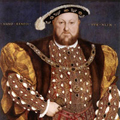


[The Reformation in England]
Down to a comparatively recent date, the popularly accepted accounts of the Reformation in England treated it as a spontaneous outburst of the deep religious spirit pervading the mass of the people; a passionate repudiation of the errors of Rome, born of the secret study of the Bible in defiance of persecution, and of repulsion from the iniquities of the monastic system. Then there arose a picturesque historian, who recognised in Henry VIII. and Thomas Cromwell the men who created the Reformation; and having once imagined them as the captains of a great and righteous cause, succeeded in interpreting all their actions on the basis of postulating their single- eyed devotion to reform as their ever-dominant motive. A view so difficult to reconcile with some other stereotyped impressions has invited criticism; and it is not unusual now to be told that the changes effected by the Reformation were small, except in so far as the Church was robbed by the destruction of the monasteries.
[Its true character]
As a matter of fact the change which took place was very great and very far-reaching for the nation, though it is easy to exaggerate the deviations from Roman doctrine imposed by it on the clergy of the Anglican Communion. But the movement was one in which many factors were at work. Moralists, theologians, and politicians, all had their share in it; some who were prominent promoters of it in one phase were its no less active antagonists in another; and not infrequently were guided by purely personal ambitions and interests throughout. In its essence however the Reformation was a revolt against conventions which had lost the justification of the conditions that had brought them into being, and had become fetters upon intellectual and spiritual progress instead of aids to its advancement. Each group of reformers was ready enough to impose on the world a new set of conventions of its own manufacture, but no group succeeded in dominating the aggregate of groups; and thus in the long run toleration became the only working policy, though its practice was by no means what the Reformers had set before themselves. After long years, religious liberty was the outcome of their work; but few indeed were the martyrs whose blood was consciously shed in that great cause. The men who died rather than submit their own convictions to the dictation of others were for the most part ready, when opportunity offered, to sit in judgment on those who would not accept their own dictation.
[Religious decadence]
The prevailing conditions of the Church at the dawn of the Reformation were exceedingly corrupt, with the corruption of worn out institutions; but they appeared to be part of the necessary order of things. Hitherto, occasional heretics had arisen, but (superficially at least) they had been suppressed without serious difficulty. The State, in England and elsewhere, had entered upon conflicts with the priesthood; secular monarchs had even challenged the authority of the Pope; but such quarrels had ended in compromises formal or practical. Moral reforming movements like that of St. Francis had arisen within the Church herself; they had not been antagonistic to her, and they had thriven and decayed without producing revolutionary results. Clerical abuses had been for centuries the objects of satire, but the satirists rarely had any inclination for the role of revolutionaries or martyrs. The recent revival of learning had developed a scepticism which was however habitually accompanied by a decent profession of orthodoxy. That there was prevalent unrest had long been obvious; that there was risk of disturbing developments was not unrecognised; but that these things were the prelude to a vast revolution had been realised neither by Churchmen, Statesmen, nor literati.
[The Scholar-Reformers]
It did not appear, then, that the revolt of Wiclif in England and of Huss in Europe was about to be renewed: though they had in fact prepared the soil to receive the new seed. Lollardry had been driven beneath the surface. Still, so far at least as it represented anti-clericalism rather than a theological system, its secret disciples were accorded a considerable measure of popular sympathy; though it numbered few professors among the cultivated classes, it had semi-adherents even among the wealthier burgesses of London; it was active enough to cause some alarm to Convocation, and to excite reactionary bishops. But it was not in this quarter primarily that any notable movement seemed likely to arise. The demand for Reformation during the first quarter of the century was formulated by scholars who were not heretics - Dean Colet of St. Paul's; Thomas More; the cosmopolitan Erasmus, who was but a bird of passage in this country, yet one who was warmly and generously welcomed.
To men of this school, a schism in the Church never presented itself as a desirable end. Luther had not yet burned Pope Leo's Bull when Colet died; Lutheranism changed More into a reactionary, as, centuries later, the French Revolution changed Edmund Burke; Erasmus would not range himself beside the stormy controversialists of Germany and Switzerland. To the scholars, the Roman system was not irreconcilable with truth; its defects were accidents, excrescences, curable by the application of common-sense and moral seriousness. In the eyes of Luther and Zwingli, the corruption of Rome was vital, organic, incurable. Ecclesiastical Authority was the corner-stone of the Roman system: Colet and More never attacked it; Luther attacked it because it maintained opinions which he held to be fundamentally false; but in England it is possible to doubt whether the attitude of More and Colet would ever have been officially discarded, had it not been for the political and personal considerations which led Henry and Cromwell to trample ecclesiastical authority under foot. Nevertheless, by their attacks on ecclesiastical abuses, Colet and More helped intelligent people to perceive that the abuses were intolerable, and to acquiesce even in the extreme remedy of schism rather than continue to endure the burden.
[Ecclesiastical demoralisation]
It is not disputable that the existing corruption was so serious that some kind of Reformation was absolutely necessary. Where the head is corrupt, there cannot be much general health. If the spiritual head of Christendom were unworthy of his office the ecclesiastical body was certain to suffer; nor could much spirituality be looked for therein, if it habitually acquiesced in the election of Popes in whom spirituality was the last quality recognisable. The climax was perhaps reached when a Borgia - Alexander VI. - was raised to the papal throne; a man who revelled in the practice of every imaginable vice, and shrank from no conceivable crime. The mere fact that such an election was possible is sufficient proof of the utter absence of religious feeling in the ruling ranks of the clergy: nor was its presence compatible with the appointment either of his free living and warlike successor Julius II. or of Leo X. who followed - a person of no little culture, a patron of art and of letters, whose morals were not exceptionally lax as compared with those of the average Italian noble, but in all essentials a pagan. With few exceptions, the princes of the Church owed their position to their connexion, by birth or otherwise, with great families; not a few of them were territorial lords of considerable dominions, for whom it was a sheer necessity to be politicians first, whether they were scholars, ministers of the Gospel, or mere pleasure-seekers afterwards. Italians completely dominated the college of cardinals, looking upon the control of the Church as a national prerogative. The characteristics of the ecclesiastical princes were shared in due degree by bishops and abbots. The fact that until recent years learning had been practically a clerical monopoly necessarily made the clergy the fittest instruments for carrying on much State business, thereby withdrawing many of the better men from the service of religion to the service of politics. In brief, the whole system tended to entangle the able members of the ecclesiastical body in the temptations not so much of the Flesh and the Devil as of the World.
[Monastic corruption]
Further, the monastic system had utterly fallen away from its pristine ideals. It had served a great purpose. Born as it was when the world was just emerging from paganism, and the Roman civilisation was being engulfed in the flood of barbarian invasion, the men and women who withdrew from the desperate turmoil without to the sheltering walls of the monastery or the convent, invested with a sacrosanct character which was at least in part respected, found therein the opportunity for prayer, meditation and study which was denied them elsewhere. They could maintain a standard of piety, and keep a rudimentary education from altogether dying out. For centuries they were the only source of alms and succour to which the afflicted and needy could turn; and so long as the rules of the Orders were observed in the spirit and in the letter, they were a genuine help towards a life of self-devotion, of self-abnegation whereof the ultimate motive was not always a subtle form of self-seeking. But as time passed, the monasteries became the recipients of the bounty of pious benefactors. Their inhabitants, in spite of ascetic regulations, found that life was none so hard - at least in comparison with that of serfdom or villeinage; luxuries were not less available than to the laity. The privileges of the sacred office gave increasing opportunities for vicious indulgence when once corruption had entered a Religious house. Promotion became the prize of intrigue instead of the recognition of piety; till it came to be no scandal when a political priest was rewarded for his services by presentation to the rule of a wealthy abbey, with which he was connected only as the chief recipient of its revenues, as when Wolsey had St. Albans bestowed on him in return for his diplomatic labours. Apart from the diatribes of zealots and the evidence of interested informers, apart also from the inclination to generalise from well authenticated but extreme examples, it is evident that, in the absence of a positive religious enthusiasm, the system was peculiarly liable to grave degeneration; and it was long since there had been any active spiritual revival to counteract that tendency.
[The proofs]
To these general considerations we have also to add the direct positive evidence in connexion with Cardinal Morton's visitations of the Monasteries in the reign of Henry VII. It was neither shown nor attempted to be shown that the Religious houses en bloc were hotbeds of vice. But it was shown beyond question that even among the great Abbeys there were to be found appalling examples of corruption and profligacy, where the heads were the worst offenders and the rank and file imitated their superiors; and that small houses were not infrequently conducted in the most scandalous manner - for the simple reason that, when once corruption had found an entry, there was no supervising external authority sufficiently interested to intervene vigorously.
Mutatis mutandis, what was true of the Monasteries was also true of the Mendicant Orders. The class of men who had no desire to dig, and no shame about begging, found the friar's robe a useful adjunct to the latter occupation. Long after enthusiasm had ceased to draw any large numbers into the ranks of the friars, they were increased and multiplied by crowds of ignorant and idle rogues, who were subjected to no adequate control.
[Corruption of doctrine]
But the corruption of the clerical body fostered also the degeneration of popular religious conceptions. The actual teaching of the clergy was a grotesque distortion of the doctrines they professed to expound. The intelligible doctrine of absolution following on repentance and confession, and accompanied by penance, had been transformed into that of absolution purchasable by cash. Reverence for the relics of saints and martyrs had been degraded by their spurious multiplication. The belief that such relics were endowed with miraculous properties had been utilised to convert them into fetishes, and pampered by fraudulent conjuring tricks. The due performance of ceremonial observances was treated as of far more vital importance than the practice of the Christian virtues. The images of the Saints had virtually come to be regarded not as symbols, but as idols possessed of various degrees of power, the assistance of one and the same saint proving more or less efficacious according to the shrine favoured by his suppliant.
[Evidence from Colet and More (1512-18)]
These facts are not disputable. They were fully recognised by Reformers of the type of Colet and More, who would have had the Church reform herself by reverting to the primitive and orthodox expression of the doctrines of which these deformities were a corrupt latter-day misrepresentation, and to the ideals of life and conduct which had been overlaid by ceremonial observances. The primitive doctrines they accepted without question; as regarded the ceremonial observances, they objected to them not in themselves but only so far as they obscured in practice the much higher value of moral ideals. In the view of such men the remedy for heresies lay in the hands of the clergy: would they but bring their lives into some conformity with primitive ideals, surrendering the pursuit of place, profit, or pleasure to tread in the footsteps of the apostles, heresy would perish of inanition.
[Later evidence]
When Colet was preaching at St. Paul's, when More was imagining the Utopia, when Erasmus was preparing his Praise of Folly and his edition of the Greek Testament, the name of Luther was still unknown. Their aim was the active propagation of reform; not to exercise thereon a restraining influence, which at that time would have seemed superfluous. The only reason they could have had for understating the existing corruption would have been fear of the authorities, a fear from which both Colet and More always showed themselves conspicuously free. Colet's most vigorous exhortations were addressed to prelates and persons in high places; More never throughout his career hesitated to oppose Chancellors, or even Tudor Kings, when a principle was involved. We are therefore entitled to assume that they neither over-coloured nor deliberately toned down the prevalent conditions. A decade later, when fanaticism had broken loose, the anathemas hurled at the clergy by irresponsible pamphleteers, or zealots who were sheltered in the Lutheran States of Germany, were of a much more sweeping character. Later, again, the reports of the Commissioners for the suppression of monasteries formed an appalling indictment. Later still, when the Protestant party won the upper hand after a season of relentless and embittering persecution, the pictures they painted of the past were lurid in the extreme. But the evidence of such witnesses could not be other than passionately biassed, just as the evidence of persecuted monks and nuns must have been biassed on the other side: whereas the evidence of Colet, of More in his earlier days, and, with certain reservations, of Erasmus, is that of honest and high-minded men of great intellectual capacity, speaking without prejudice of conditions with which they were in direct contact. Their assertions, and the fair inferences from their assertions, are a safe basis from which we can ascertain both the gravity and the limits of the corruption which existed in England.
[Dean Colet]
John Colet was appointed to the Deanery of St. Paul's four or five years before the death of Henry VII., being transferred thither from Oxford, where he had won high repute, not merely for character and learning, but as the initiator of a new and rational method of Scriptural study in place of the old scholasticism. At St. Paul's the Dean proved himself a great preacher, exercising also in private life a powerful influence on all who came in contact with him, alike from the splendour of his intellect and the large-hearted purity of his character. His outspoken sermons were by no means to the liking of his bishop; but some of the leading prelates, notably Warham of Canterbury and Fox of Winchester, were well disposed to the new school of learning and exposition and to higher moral standards, as Cardinal Morton had been. When the young King ascended the throne in 1509, his accession was hailed by all men of the new school as heralding the reign of intellectual liberty and enlightenment.
[Colet's sermon, 1512]
Accordingly, when Convocation was summoned in 1512 to discuss the suppression of heresy, in consequence of some stray reappearances of Lollardry, the prevalence of a wider spirit was shown by the selection of Colet to preach the opening sermon, and by the subsequent ignominious failure of the Bishop of London to have the Dean punished as a heretic. It is to the sermon preached on this occasion that we must turn to see how Colet viewed the situation. It was a direct indictment of the manner of life of the clergy from Wolsey down; a summons to them to amend their ways, to set a higher example to their flock; an appeal to them to fix their eyes on apostolic ideals, and so to remove the real incitement which turned men's minds to heretical speculation. While the positive arguments of the preacher are evidence not only of the purity of his own aims and his courage in supporting them, their reception shows that the substantial justice of the indictment was recognised by the audience at whom it was personally directed, however little disposed they might be to act individually on his appeal. On the other hand however, it is a striking fact that the charges brought are almost exclusively of worldliness, laxity, indiscipline, unbecoming in pastors and in ministers of the Gospel of Christ - though these charges were pressed home relentlessly; not at all of that rampant immorality and vice of which the clergy were so freely accused in later years. From what Colet did not say, we may fairly infer a reasonable average of respectability among them.
[Erasmus]
If, in the Encomium Moriae or Praise of Folly, which Erasmus wrote at about the same period (1511), the vices and follies of the Church were lashed with a mockery still more unsparing, we have to note, first, that the great scholar drew his picture less from England than from the Continent; next, that it had no injurious effect on his appointment to the professorship of Greek at Cambridge. The patronage extended to him by the Primate, and by Fisher of Rochester, the most orthodox and saintly of the English bishops, is a sufficient proof that the authorities were not bigoted enemies of all reform; a proof borne out by the enthusiastic welcome extended to his edition of the Greek Testament in 1518, by Fox of Winchester amongst others.
[The Utopia, 1516]
From the Utopia of Sir Thomas More we derive precisely the same impression. In 1516, when the work was published, Luther had not yet defied the Pope; the German Peasants' War had not yet broken out, nor the spread of new ideas been associated with Anarchism under the name of Anabaptism. Persecution, which fifteen years later More advocated and practised as the unavoidable remedy for the spread of doctrines which he had come to regard as actively pernicious, was alien to his instincts; in his ideal Commonwealth, men might expound whatever they honestly held, provided they did not deny God and the Future Life. More's nature was tolerant and charitable. But his own convictions were thoroughly orthodox; he had at one time a strong disposition to enter the priesthood himself; he held the priestly office in high reverence. Yet his restriction of the number of priests in Utopia shows his vivid consciousness of the evil wrought by their unrestricted multiplication in England; and in the description of English social conditions in the introductory portion of his work, he refers in emphatic terms to the large proportion of "sturdy vagabonds" among them. His whole tone in the section of his book devoted to religious matters implies that he is pointing a contrast between his ideal order of things and that familiar to his readers, wherein non-essentials are so emphasised that essentials are practically forgotten. Yet More, like Colet, makes no sweeping attack on the morality (in the narrower popular sense of the term) prevalent among the clerical body.
[Exaggerated attacks]
The wholesale condemnation of later days has been largely due to the acceptance without qualification of denunciations poured forth in the heat of controversy, in days when men did not mince words and were not given to the careful weighing of evidence. Typical of such works is the Supplicacyon for the Beggers produced by one Simon Fish in 1527, which has been seriously treated as a sober indictment. The Clergy, from Bishops to "Somners" are a "rauinous cruell and insatiabill generacion" ... "counterfeit holy and ydell beggers and vacabundes" ... "that corrupt the hole generation of mankind," committing "rapes murdres and treasons". They are a "gredy sort of sturdy idell holy theues" habitually guilty of every conceivable form of vice and profligacy. The pamphlet teams with arithmetical absurdities. It is simply inconceivable that the growth within the realm of such an organisation as is here depicted would have been permitted; or that, if there, it would not have been sternly repressed by Henry VII.; or that if it had survived the first Tudor, the second would have suffered it to flourish unregarded for eighteen years of his reign. The exaggeration is so flagrant that we can hardly infer from it even a substratum of truth. Such diatribes as this must be referred to, not as being valid evidences against the accused, but as proving the passion of the controversy, and the hesitation necessary before accepting conclusions traceable to the wild and whirling words of such controversialists.
[Sidenote 1: Clerical privileges] [Sidenote 2: Tentative reforms]
In another respect however there was a serious demand for reform; namely the legal and judicial privileges which the ecclesiastical body had acquired in the course of centuries, and which had gradually become the source of serious abuses. The administration of certain branches of the Civil Law had been absorbed by the Clerics, who were charged with converting their functions into an elaborate machinery for extorting fees; and on the Criminal side, what was known as Benefit of Clergy, as well as the rules of Sanctuary, had become not merely anomalous but an actual encouragement to crime. Any criminal or accused person who succeeded in reaching Sanctuary was safe from the secular arm; and any one who could produce evidence, even of the flimsiest character, that he was a cleric could claim to be tried by the ecclesiastical instead of the secular courts. Originally these privileges had been of very great service in the wild days when judicial treatment was at least more readily obtainable from the Clergy, when trial by ordeal was common, and the merciless punishments of the ordinary law gave place to the milder but not ineffective penalties of Ecclesiastical discipline. Even the legal fictions by which evildoers were allowed to claim Benefit of Clergy as Clerics had their justification. But when even murderers could escape with a moderate penance as Clerics, because they could read, the general public were hardly the better. A beginning of reform in this direction had been made when Henry VII. obtained a Bull diminishing the rights of Sanctuary in cases of treason; and again in 1511 when the rights both of Sanctuary and Benefit of Clergy were withdrawn from murderers. It was noteworthy however that there was a protest against even this made by the Clergy in 1515; when one Dr. Standish, for justifying the measure, was attacked by the Bishops in Convocation. Warham and Fox both supported the old privileges. The temporal lords on a commission appointed to enquire into the matter sided with Standish, and declared that the Bishops had incurred the penalties of praemunire. Wolsey tried to persuade the King to refer the question to the Pope, but the King asserted the rights of the Crown in uncompromising terms. The Bishops had to submit to a sharp rebuke, and Standish was made a Dean not long after. The episode was a premonition of future events.
[The Educational Movement]
It does not appear that the writings or the preaching of the scholars had any marked effect on the conduct of the clergy, or aroused any general reforming zeal. But in one direction, that of education, they exercised a very material influence on the intellectual attitude of the younger generation. Dean Colet is known to-day to many even of those who take little interest in his times, as the founder of St. Paul's School, where he endeavoured to make the teaching of the young a real training instead of a drill in pedagogic formulae. And as he set the example which was by degrees followed in other grammar schools, so the example he had already set at Oxford was followed both there and at Cambridge by his disciples. To him, more than to any other man, was due the practical application of the new knowledge of Greek to the study of the New Testament, resulting primarily in the treatment of the Pauline Epistles as organic structures; as connected treatises, instead of collected texts according to the custom of the schoolmen; who, dragging phrases from their context, expanded, interpreted and harmonised them with other phrases for fresh expansion and interpretation; neglecting the apostolic argument to illustrate their own theses or those of the mediaeval doctors. Fox, of Winchester, when he founded Corpus Christi College, Oxford, Fisher in the Lady Margaret foundations at Cambridge, put into them men of the new school. Wolsey himself had evidently been influenced by the new methods, for his active connexion with Oxford had not ceased when Colet was there; and when in later years he founded Cardinal College, afterwards Christ Church, the men he appointed to it were chosen from the disciples of the school of Colet and Erasmus. To this higher ideal of University education, perhaps the strongest impulse was given by Erasmus himself, during the brief time about 1512 when he was Professor of Greek at Cambridge, where he proved himself the most brilliant exponent of the principles which in part at least he had imbibed from the Dean. Cranmer, his great rival Gardiner, and many others among the protagonists in the coming religious struggle, received their training under the new conditions - conditions very markedly affected by that edition of the New Testament, to which reference has already been made, issued by Erasmus from Basle in 1516 after he had left England: a work in which the Greek text appeared side by side with a new Latin translation, in place of the orthodox "Vulgate" whereof the stereotyped phraseology had acquired, through centuries of authorised interpretation, a meaning often very far removed from that of the original.
[Wolsey and the Reformation]
Thus what the Scholars accomplished was not Reform but the preparation of men's minds for Reform. What Wolsey the Statesman might have done, if foreign affairs had not occupied the best of his energies, we can only guess. His point of view was that of a Politician, not that of a man of religion. Such reforms as he might have been prepared to introduce would not have been the outcome of any lofty idealism, but only such as seemed to be dictated by public decency. As a Statesman, he was alive to the advantages of education, desired much of the wealth of the Church to be turned into that channel, and founded colleges, which he staffed with men of the new school and financed in part from the proceeds of suppressed religious houses. He went so far as to procure a papal Bull for the abolition of all Houses numbering less than seven inmates. But it may be doubted whether the real motive of the suppression was not rather the appropriation of funds for his favourite schemes than zeal for monastic morality. As Cardinal and Legate and an aspirant to the Papacy, he could never have lent himself to a policy calculated to weaken the ecclesiastical organisation; he could never have associated himself with Colet's campaign against clerical worldliness, of which there was no more conspicuous example in the kingdom than he. Having children himself by an illicit union, he could hardly have taken high ground as a reformer of morals. In brief, he must have confined his treatment of the situation within the limits of the work of a politician with educational leanings. What he actually did was to renew the monastic visitations set on foot by Cardinal Morton, to suppress some few small houses as corrupt or superfluous, and to encourage the new school of teaching which no one of authority had hitherto condemned as heretical. As to actual heresy, he looked on it with the eyes not of a theologian but of a politician; as a thing to be suppressed if it threatened public order, but otherwise negligible. He sought also to diminish the abuses connected with the ecclesiastical courts by the establishment of a Legatine Court of his own. But there is no sign that he was ever alive to the volcanic forces at work; or recognised that sooner or later the revolution which Luther initiated in Europe would have to be reckoned with in England also. Even at the time when the great Cardinal fell from power, there were but slight signs within the realm of the coming revolt, mutterings of a growing storm. No prophet had arisen denouncing the evil of the times convincingly, no statesman propounding drastic remedies; only the scholars had been preaching amendment, and occasional zealots had been bringing discredit on the cause of reformation by the violence of their incriminations. The far-reaching political effect of the religious differences was long in being realised on the Continent; in England it was still longer in making itself felt. Yet the Lutheran revolt was destined vitally to influence both the international relations and the internal order of every State in Christendom.
[The Lutheran Revolt, 1517]
In 1517 Pope Leo X. was in want of money: and one of the recognised methods of obtaining it was the sale of Indulgences - that is to say, remissions in the duration of Purgatorial sufferings, ratified by His Holiness, and purchasable for cash. The whole thing being simply a commercial transaction, the Indulgences were offered at popular prices. There was nothing new in the method. The Lay Princes had no objections to the sale in their territories, since they could demand a share in the profits as the condition of their permission. The system moreover had been held up to ridicule before. But on this occasion, there were two novel features: one, the unprecedented scale on which the transaction was to be worked, the other the nature of the opposition it aroused. Doctor Martin Luther, an Augustinian monk and Professor at the University of Wittenberg in Saxony had been coming to the conclusion that the practices of the Church were not what they should be, and that much of her teaching was false. The affair of the Indulgences brought things to a head; and when Tetzel the Papal Commissioner was approaching Saxony, Luther drew up a counterblast in the form of a series of propositions which he nailed up publicly on the Church doors. Moreover he received unexpected support from the "Good Elector" Frederick, who forbade Tetzel to enter his dominions.
[Luther's defiance, 1520]
Leo was occupied with political affairs, which seemed for the time to be more important than the heretical vagaries of an obscure monk. Wolsey's diplomacy was working up to the point at which in 1518 he attached France to England in the alliance which culminated in the "Universal Peace," the Cardinal having supplanted the Pope as the moderator in the disputes of the great Powers. Then Maximilian died, and the Imperial Election absorbed political attention, with the ensuing complications described in a previous chapter. Meantime however, Luther was waxing increasingly determined; instead of quailing at threats, he was fully resolved to maintain his convictions and fight the matter out. As to what he had done, he appealed to a General Council; what he was going to do he made clear by exhorting the German Princes to stop their tributes to Rome. The advice had a natural attraction for the German Princes though they might lack enthusiasm on questions of theology. Leo issued a Bull condemning Luther. Luther answered by publicly burning the Bull (December 10th, 1520).
[The Diet of Worms, 1521]
The young Emperor, fresh from his coronation at Aachen, was about to hold the Diet of the Empire at Worms. It was his policy to maintain friendly relations with Rome; and Luther was summoned to the Diet under a safe-conduct. The precedent of Huss showed how little such a safe-conduct was worth; but the great Reformer was undaunted. Frederick of Saxony, encouraged by Erasmus, was known to be on his side. He faced the Diet, reaffirmed his heresies, and emphasised his flat repudiation of Papal Authority. He had fiery supporters and fiery opponents. His life was in the gravest danger, and his death would have been followed by a bloody collision between the two parties. The disaster was averted by the Elector Frederick who kidnapped him for his own sake and carried him off to a secure retreat in the Wartburg: where he remained for nearly a year, working at his translation of the Bible. The Diet however confirmed an edict condemning Luther and his doctrines. The English King moreover, who accounted himself no mean theologian, issued a refutation of the Lutheran heresies which won for him from Pope Leo the title of Defender of the Faith.
At this time, and for some time to come, the Papacy regarded Francis I. with hostility, and looked upon his Italian ambitions as dangerous to itself. Hence there was a natural tendency to alliance between Rome and the Emperor. 1521 was the year of the ineffectual Conference of Calais, followed by the death of Leo X., the election of the (Imperial) Pope Adrian in the next year, and the embroilment of England in the European wars. Charles was sufficiently occupied with these high political matters, and was personally withdrawn from Germany, whose affairs were more or less controlled by an Imperial Council in which Frederick of Saxony was the guiding spirit; popular sentiment was on Luther's side, and the Worms edict was practically a dead letter. But the seclusion of the great Reformer threw the movement largely into the hands of extremists such as Carlstadt and Münzer to whose anarchical theories he was opposed as vehemently as to Rome.
[1524 The German peasant rising]
Now we shall presently see that in England itself there was strong ground for discontent with the prevailing social order and the relations between the peasantry and the landed classes: but in Germany matters were very much worse. In England there had always been a tendency for the religious reformers to associate their movements with demands for social reform; and so it was now to an exaggerated degree in Germany. Social revolution was no part of the scheme of Luther and his lieutenant Melanchthon; but in defying the authority of Rome they had awakened the revolutionary spirit. Fired with religious fanaticism, the demagogues acquired a new character, a devouring zeal, a reckless courage. At last in 1524 the peasants rose demanding redress for their grievances. What they asked was indeed bare justice according to any intelligent modern view; yet the granting of their demands would have been completely subversive of the existing social order. The upper classes were united against them, Luther and his associates denounced them. The fiercest passions broke loose: there were ghastly massacres and ghastly reprisals, ending in the slaughter of scores of thousands of peasants, and the complete suppression of the rising.
[Its effect in England]
The Lutherans proper had emphatically dissociated themselves from the zealots who stirred up the "peasants' war," which did not alter the general attitude of the Germans on the religious question. But in England, these things had a serious effect. The Lutheran heresies were condemned as heresies in this country before the outbreak, and a considerable number of heretically inclined Englishmen took refuge in the German States, where they looked to find countenance. Being for the most part men of extreme tendencies, those tendencies were quickened; whence it resulted that in importing the new religious doctrines from Germany they combined them more or less with the doctrines of social revolution. Thus the distinction between the two movements was lost sight of, and the profession of the new doctrines was regarded as not merely heretical but in itself anarchical - a thing which must be suppressed in the interests of public order. Hence we find the curious paradox of Thomas More, the one-time advocate of a toleration which was obviously in accord with his instincts, becoming in course of time the advocate and agent of a rigorous intolerance and a relentless persecution.
[Sidenote 1: 1525 The Empire and the papacy] [Sidenote 2: 1527 The sack of Rome]
The Peasants' Revolt was crushed in the summer of 1525. Before this end was accomplished, the Good Elector passed away - a wise, kindly, tolerant man who had exercised an immense moderating influence by simple benignity, shrewdness, and force of character. A little earlier, the ambitious schemes of Francis I. had been shattered by the disaster of Pavia. In effect, the whole European situation was changed completely since the death of Leo X. in 1521. His successor Adrian was a man of good intentions but limited purview; the great issues at stake were beyond his grasp, and his attempts at disciplinary reforms were made nugatory by the stolid immobility of the hierarchy. After a brief reign he was succeeded by Clement VII., a man of considerable talent and inconsiderable ability: a man shifty and fearful, not fitted to cope with the stubborn wills of the reigning princes and their ministers, or with the moral and intellectual forces which were threatening the supremacy of the historic Church. The collapse of the French in Italy gave Charles a power which filled Clement with alarm, since his friendliness was no longer of political moment to the Emperor, while sentimental considerations would certainly not suffice to retain the active support of Wolsey and England. In 1526 the insecurity of his position was emphasised by the attitude of the Imperial Diet held at Spires, where Charles through his brother Ferdinand withdrew from the position of anti-Lutheranism to adopt that of impartial toleration, and it was decreed in effect that each Prince might sanction what religion he would, within his own territories; thus cancelling the Decree of Worms. The capture and occupation of Rome by troops mainly Spanish in the same year, despite the Emperor's repudiation, was another alarming symptom; which received a terrifying confirmation in 1527, when the Imperial troops, Spanish and German, headed by the "Lutheran" Frundsberg and the Constable of Bourbon, turned their arms upon the Holy City, stormed it, sacked it with a savage thoroughness unparalleled since the days of Alaric, and held the Pope himself a prisoner.
[1530 Diet of Augsburg]
Thus the Pope himself was now not merely dominated by the Emperor but actually in his hands. The successes of Charles however urged Francis - who had been liberated in 1526 - to renewed activity, and for a time it seemed not unlikely that he would recover his ascendency in Italy, a consummation as little to Clement's taste as the Imperial dominance. But the French King misused his opportunities and his armies met with fresh disasters. In 1529, the Pope and the Emperor were reconciled, with the result that at another Diet of Spires the Worms edict was revived and the last Spires edict revoked, in face of the protest of the Lutheran Princes which earned for them the title of Protestants. That party however was sufficiently strong to prevent its opponents from enforcing the decree over the Empire. At the Diet of Augsburg next year (1530) the decree was confirmed: the Protestants replying by drawing up the Confession of Augsburg, formulating their doctrines, a document which became the definite expression of Protestantism in the least general sense of the term - while they bound themselves for mutual support in the League of Schmalkald. The two parties seemed to be on the verge of war; but the sentiment of nationality in face of the threatening of a Turkish advance and of the non-German leanings of Charles - a sentiment most zealously preached by Luther who was a typical German patriot as well as a religious reformer - deferred the rupture till after Luther's death.
[The Swiss Reformers, 1520-1530]
The active aggressive Reformation began in Germany with Luther's attack on Indulgences. In France it made no headway for many years; in Spain and Italy none at all; in England none, till the meeting of Parliament in 1529. But the movement in Switzerland was as marked as that in Germany, and hardly less important in the influence ultimately exercised by the Swiss teachers, though of less direct political weight. Nor is it possible to follow the course of the Reformation in England, unless the separate existence of the Swiss School is duly appreciated. Switzerland was not a Political entity which could rank effectively as a make-weight in international rivalries; but its geographical conditions preserved it from interference, and permitted it, so to speak, to work out its own salvation. The country was a federation of small democratic States or Cantons, with no Princes and no nobility. It followed that when once the question of ecclesiastical reform was raised, the theories of Church Government which would find acceptance would be democratic in principle: and accordingly it was from Switzerland that the vital opposition to Episcopal systems sprang. But the main fact to be observed at this stage is, that the Swiss Reformers were not the outcome of the Lutheran movement; their movement was spontaneous, independent, and parallel. Their leader Zwingli anticipated rather than followed Luther. But an agitator who appealed to Germany and an agitator who appealed to Switzerland seemed to be of very different degrees of public importance. Hence comparatively speaking Zwingli was ignored by the authorities. Half Switzerland might - and did - revolt from the Pope, without greatly exercising the Papal mind. But in the process Zurich became hardly less important as a teaching centre and an asylum for heretical refugees than Wittenberg; and in many respects, the teaching of Zurich departed from the teaching of Rome more seriously than did the teaching of Luther. The element of Mysticism, to which the German genius is generally prone, had no attraction for the Swiss mind, while it was essential in the eyes of the Wittenberg school; so that Luther and the Zurich Reformers assailed each other with hardly less virulence than they both lavished on the Papal party. It was a long time before the term "Protestant" was extended so as to include the disciples of Zurich and Geneva.
[English heretics abroad]
Alike to Switzerland and to the German States which may by anticipation be called Protestant, there gathered during these first years an appreciable number of Englishmen, who were either already touched with Lollardry, or found themselves in revolt against prevailing doctrines or practices, or were discovering by the light of the New Learning discrepancies between the teaching of the Gospels and the current interpretation. In these territories they were for the time assured of such liberty as enabled them to issue pamphlets, dissertations, and commentaries, which found their way into England and not infrequently received effective advertisement by being publicly condemned and burnt, with the result that the few copies which escaped acquired an adventitious interest and influence. Considering the violence of the invective often conspicuous in them, and the extravagance of the controversial methods usually adopted, the treatment they met with can hardly be condemned as oppressive; whether it was politic is another question. The modern English view generally is that such repressive acts tend to defeat their own ends. On the whole however it would seem that it was the manner rather than the matter of these productions which caused the authorities to treat them and their authors with such severity, though it was done largely at the instigation of theological partisans. Thus Tindal's translation of the Bible was attacked as beingper se dangerous; but it was the accompanying commentary which ensured its suppression.
[Contrasted aims]
The fundamental fact, however, which must be borne in mind in the early stages of the Reformation in England is this: that whereas the cause to which both Luther and Zwingli devoted themselves was primarily a revision of dogmas and of the practices associated with them, the work which Henry VIII. and Thomas Cromwell were to take in hand was the revision of the relations between Church and State - of the position of the Clerical organisation as a part of the body politic; not the introduction of Lutheran or Zwinglian doctrines. Such countenance as was given to Lutheranism was given for purely political reasons. Luther's was a Religious Reformation with political consequences: Henry's was a Political Reconstruction entailing ultimately a reformed religion.