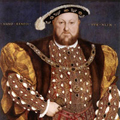
Thomas D'Arcy McGee

The Ard-Righ Roderick, during the period of Henry the Second's stay in Ireland, had continued west of the Shannon. Unsupported by his suffragans, many of whom made peace with the invader, he attempted no military operation, nor had Henry time sufficient to follow him into his strongholds.

Whether Donald Kavanagh McMurrogh, son of Dermid, was born out of wedlock, as the Lady Eva was made to depose, in order to create a claim of inheritance for herself as sole heiress, this, at least, is certain, that his descendants continued to be looked upon by the kindred clans of Leinster as the natural lords of that principality.

The daughter of Anna Boleyn was promptly proclaimed Queen the same day on which Mary died - the 17th of November, 1558. Elizabeth was then in her 26th year, proud of her beauty, and confident in her abilities. Her great capacity had been cultivated by the best masters of the age, and the best of all ages, early adversity. Her vices were hereditary in her blood, but her genius for government so far surpassed any of her immediate predecessors as to throw her vices into the shade.

Ireland, lifting herself from the dust, drying her tears, and proudly demanding her legitimate place among the nations of the earth, is a spectacle to cause immense progress in political philosophy.

By the deposition of Malachy II., and the transfer of supreme power to the long-excluded line of Heber, Brian completed the revolution which Time had wrought in the ancient Celtic constitution. He threw open the sovereignty to every great family as a prize to be won by policy or force, and no longer an inheritance to be determined by usage and law. The consequences were what might have been expected. After his death the O'Conors of the west competed with both O'Neills and O'Briens for supremacy, and a chronic civil war prepared the path for Strongbow and the Normans.

The victory of Thurles, in the year 1174, was the next important military event, as we have seen, after the raising of the second siege of Dublin, in the first campaign of Earl Richard. It seems irreconcilable, with the consequences of that victory, that Ambassadors from Roderick should be found at the Court of Henry II. before the close of the following year: but events personal to both sovereigns will sufficiently explain the apparent anomaly.

At Dublin, Richard prepared to celebrate the festival of Christmas, with all the splendour of which he was so fond. He had received letters from his council in England warmly congratulating him on the results of his "noble voyage" and his successes against "his rebel Make Murgh." Several lords and chiefs were hospitably entertained by him during the holidays - but the greater magnates did not yet present themselves - unless we suppose them to have continued his guests at Dublin, from Christmas till Easter, which is hardly credible.

If a great battle is to be accounted lost or won, as it affects principles rather than reputations, then Brian lost at Clontarf. The leading ideas of his long and political life were, evidently, centralization and an hereditary monarchy. To beat back foreign invasion, to conciliate and to enlist the Irish-born Danes under his standard, were preliminary steps. For Morrogh, his first-born, and for Morrogh's descendants, he hoped to found an hereditary kinship after the type universally copied throughout Christendom.

Hugh de Lacy, restored to the supreme authority on the recall of Fitz-Aldelm in 1179, began to conceive hopes, as Strongbow had done, of carving out for himself a new kingdom. After the assassination of O'Ruarc already related, he assumed without further parley the titles of Lord of Meath and Breffni. To these titles, he added that of Oriel or Louth, but his real strength lay in Meath, where his power was enhanced by a politic second marriage with Rose, daughter of O'Conor.

Syndicate content