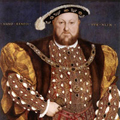
Thomas D'Arcy McGee

By the deposition of Malachy II., and the transfer of supreme power to the long-excluded line of Heber, Brian completed the revolution which Time had wrought in the ancient Celtic constitution. He threw open the sovereignty to every great family as a prize to be won by policy or force, and no longer an inheritance to be determined by usage and law. The consequences were what might have been expected. After his death the O'Conors of the west competed with both O'Neills and O'Briens for supremacy, and a chronic civil war prepared the path for Strongbow and the Normans.

Hugh de Lacy, restored to the supreme authority on the recall of Fitz-Aldelm in 1179, began to conceive hopes, as Strongbow had done, of carving out for himself a new kingdom. After the assassination of O'Ruarc already related, he assumed without further parley the titles of Lord of Meath and Breffni. To these titles, he added that of Oriel or Louth, but his real strength lay in Meath, where his power was enhanced by a politic second marriage with Rose, daughter of O'Conor.

One leading fact, which we have to follow in all its consequences through the whole of the fifteenth century, is the division of the English and of the Anglo-Irish interest into two parties, Lancasterians and Yorkists. This division of the foreign power will be found to have produced a corresponding sense of security in the minds of the native population, and thus deprived them of that next best thing to a united national action, the combining effects of a common external danger.

If a great battle is to be accounted lost or won, as it affects principles rather than reputations, then Brian lost at Clontarf. The leading ideas of his long and political life were, evidently, centralization and an hereditary monarchy. To beat back foreign invasion, to conciliate and to enlist the Irish-born Danes under his standard, were preliminary steps. For Morrogh, his first-born, and for Morrogh's descendants, he hoped to found an hereditary kinship after the type universally copied throughout Christendom.

Ireland, during the first three quarters of the thirteenth century, produced fewer important events, and fewer great men, than in the thirty last years of the century preceding. From the side of England, she was subjected to no imminent danger in all that interval. The reign of John ending in 1216, and that of Henry III.

The history of "the Pale" being recounted down to the period of its complete isolation, we have now to pass beyond its entrenched and castellated limits, in order to follow the course of events in other parts of the kingdom.

Ireland is situated in the North Atlantic, between the degrees fifty-one and a half and fifty-five and a half North, and five and a quarter and ten and a third West longitude from Greenwich. It is the last land usually seen by ships leaving the Old World, and the first by those who arrive there from the Northern ports of America. In size it is less than half as large as Britain, and in shape it may be compared to one of those shields which we see in coats-of-arms, the four Provinces - Ulster, Connaught, Leinster, and Munster - representing the four quarters of the shield.

Though Ireland dates the decay of Scandinavian power from Good Friday, 1014, yet the North did not wholly cease to send forth its warriors, nor were the shores of the Western Island less tempting to them than before. The second year after the battle of Clontarf, Canute founded his Danish dynasty in England, which existed in no little splendour during thirty-seven years. The Saxon line was restored by Edward "the Confessor;" in the forty-third year of the century, only to be extinguished for ever by the Norman conquest twenty-three years later.

We have already told the tragic fate of the two adventurers - Fitzstephen and de Cogan - between whom the whole of Desmond was first partitioned by Henry II. But there were not wanting other claimants, either by original grant from the crown, by intermarriage with Irish, or Norman-Irish heiresses, or new-comers, favourites of John or of Henry III., or of their Ministers, enriched at the expense of the native population.

Syndicate content