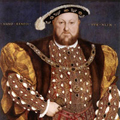
Ireland

The kings of the eighth century are Congal II. (surnamed Kenmare), who reigned seven years; Feargal, who reigned ten years; Forgartah, Kenneth, Flaherty, respectively one, four, and seven years; Hugh V. (surnamed Allan), nine years; Donald III., who reigned (A.D. 739-759) twenty years; Nial II. (surnamed Nial of the Showers), seven years; and Donogh I., who reigned thirty-one years, A.D. 766-797. The obituaries of these kings show that we have fallen on a comparatively peaceful age, since of the entire nine, but three perished in battle.

The total population of Ireland, when the Normans first entered it, can only be approximated by conjecture. Supposing the whole force with which Roderick and his allies invested the Normans in Dublin, to be, as stated by a cotemporary writer, some 50,000 men, and that that force included one-fourth of all the men of the military age in the country; and further, supposing the men of military age to bear the proportion of one-fifth to the whole number of inhabitants, this would give a total population of about one million.

No facts of the ages over which we have already passed are better authenticated than the identity of origin and feeling which existed between the Celts of Erin and of Albyn. Nor was this sympathy of race diminished by their common dangers from a common enemy. On the eve of the Norman invasion we saw how heartily the Irish were with Somerled and the men of Moray in resisting the feudal polity of the successors of Malcolm Caen-More.

The ninth and last Catholic Earl of Kildare, in the ninth year of Henry VIII., had been summoned to London to answer two charges preferred against him by his political enemies: "1st, That he had enriched himself and his followers out of the crown lands and revenues.

We have now arrived at the close of the third century, from the death of Saint Patrick, and find ourselves on the eve of a protracted struggle with the heathen warriors of Scandinavia; it is time, therefore, to look back on the interval we have passed, and see what changes have been wrought in the land, since its kings, instead of waiting to be attacked at home, had made the surrounding sea "foam with the oars" of their outgoing expeditions.

The relations of the Irish with other nations, notwithstanding the injurious effects of their War of Succession on national unity and reputation, present several points of interest. After the defeat of Magnus Barefoot, we may drop the Baltic countries out of the map of the relations of Ireland.

From Loughsweedy, Bruce broke up his quarters, and marched into Kildare, encamping successively at Naas, Kildare, and Rathangan. Advancing in a southerly direction, he found an immense, but disorderly Anglo-Irish host drawn out, at the moat of Ardscull, near Athy, to dispute his march.

Upon the disgrace of Lord Leonard Gray in 1540, Sir Anthony St. Leger was appointed Deputy. He had previously been employed as chief of the commission issued in 1537, to survey land subject to the King, to inquire into, confirm, or cancel titles, and abolish abuses which might have crept in among the Englishry, whether upon the marches or within the Pale. In this employment he had at his disposal a guard of 340 men, while the Deputy and Council were ordered to obey his mandates as if given by the King in person.

Syndicate content