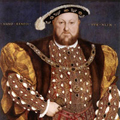
Geoffrey de Villehardouin

Now let us leave off speaking of those who were at Philippopolis, and of Renier of Trit, who is shut up in Stanimac, and return to Henry, the brother of the Emperor Baldwin, who had sojourned at Pamphyle till the beginning of winter. Then he took council with his men and with his barons; and they decided to set a garrison in a city called Rusium, which was situate at a place rich and fertile in the middle of the land; and the chiefs placed over this garrison were Thierri of Loos, who was seneschal, and Thierri of Tenremonde, who was constable.

Then the Doge spoke to his people, and said unto them:

Signors, these people cannot pay more; and in so far as they have paid at all, we have benefited by an agreement which they cannot now fulfil. But our right to keep this money would not everywhere be acknowledged; and if we so kept it we should be greatly blamed, both us and our land. Let us therefore offer them terms.

Johannizza, the king of Wallachia, who had besieged Adrianople, gave himself no rest, for his petraries, of which he had many, cast stones night and day against the walls and towers, and damaed the walls and towers very greatly. And he set his sappers to mine the walls, and made many assaults. And well did those who were within, both Greeks and Latins, maintain themselves, and often did they beg the Emperor Henry to succour them, and wam him that, if he did not succour them, they were utterly undone.

The barons consulted together on the morrow, and said that they would show the young Alexius, the son of the Emperor of Constantinople, to the people of the city. So they assembled all the galleys. The Doge of Venice and the Marquis of Montferrat entered into one, and took with them Alexius, the son of the Emperor Isaac; and into the other galleys entered the knights and barons, as many as would.

For this embassy were chosen Conon of Béthune and Geoffry of Villehardouin, the Marshal of Champagne, and Miles the Brabant of Provins; and the Doge also sent three chief men of his council. So these envoys mounted their horses, and, with swords girt, rode together till they came to the palace of Blachernae. And be it known to you that, by reason of the treachery of the Greeks, they went in great peril, and on a hard adventure.

I know not by whose counsel it was that the emperor replied that he was determined to march towards Salonika, and would afterwards attend to his other affairs. Sire," said Boniface, Marquis of Montferrat, " I pray thee, since I am able without thee to get possession of my land, that thou wilt not enter therein; but if thou dost enter therein, I shall deem that thou art not acting for my good. And be it known to thee that I shall not go with thee, but depart from among you." And the Emperor Baldwin replied that, notwithstanding all this, he should most certainly go.

We will speak no further now of Renier of Trit but return to the Emperor Baldwin, who is in Constantinople, with but very few people, and greatly angered and much distracted. He was waiting for Henry his brother, and all the people on the other side of the straits, and the first who came to him from the other side of the straits came from Nicomedia, viz.: Macaire of Sainte-Menehould, and Matthew of Wallincourt, and Robert of Ronsoi, and with them full a hundred knights.

Thierri of Tenremonde, who was chief and constable, made a foray on the fourth day before the feast of St. Mary Candlemas (30th January 1206); and he rode all night, having six score knights with him, and left Rusium with but a small garrison. When it was dawn, he came to a village where the Comans and Wallachians were encamped, and surprised them in such sort that those who were in the village were unaware of their coming.

Then, on a Sunday, was assemblage held in the church of St. Mark. It was a very high festival, and the people of the land were there, and the most part of the barons and pilgrims.

The emperor, with as many men as he possessed, had prepared to go to Adrianople, when tidings came, very grievous, that Escurion, who was admiral of the galleys of Theodore Lascaris, had entered with seventeen galleys into the straits of Abydos, in the channel of St. George, and come before Skiza, where Peter of Bracieux then was, and Payen of Orléans; and that the said Escurion was besieging the city by sea, while Theodore Lascaris was besieging it by land.

Syndicate content