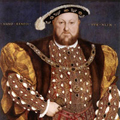
Thomas D'Arcy McGee

Since we have no Roman accounts of the form of government or state of society in ancient Erin, we must only depend on the Bards and Story-tellers, so far as their statements are credible and agree with each other. On certain main points they do agree, and these are the points which it seems reasonable for us to take on their authority.

We have already told the tragic fate of the two adventurers - Fitzstephen and de Cogan - between whom the whole of Desmond was first partitioned by Henry II. But there were not wanting other claimants, either by original grant from the crown, by intermarriage with Irish, or Norman-Irish heiresses, or new-comers, favourites of John or of Henry III., or of their Ministers, enriched at the expense of the native population.

We have already described the limits to which "the Pale" was circumscribed at the beginning of the fourteenth century. The fortunes of that inconsiderable settlement during the following century hardly rise to the level of historical importance, nor would the recital of them be at all readable but for the ultimate consequences which ensued from the preservation of those last remains of foreign power in the island.

The conversion of a Pagan people to Christianity must always be a primary fact in their history. It is not merely for the error it abolishes or the positive truth it establishes that a national change of faith is historically important, but for the complete revolution it works in every public and private relation.

The last scene of the Irish monarchy, before it entered on the anarchical period, was not destitute of an appropriate grandeur. It was the death-bed scene of the second Malachy, the rival, ally, and successor of the great Brian. After the eventful day of Clontarf he resumed the monarchy, without opposition, and for eight years he continued in its undisturbed enjoyment.

We may estimate the power of the de Lacy family in the second generation, from the fact that their expulsion required a royal army and navy, commanded by the King in person, to come from England. Although pardoned by John, the brothers took care never to place themselves in that cowardly tyrant's power, and they observed the same precaution on the accession of his son, until well assured that he did not share the antipathy of his father.

Perhaps no preface could better introduce to the reader the singular events which marked the times of Gerald, eighth Earl of Kildare, than a brief account of one of his principal partizans - Sir James Keating, Prior of the Knights of St. John. The family of Keating, of Norman-Irish origin, were most numerous in the fifteenth century in Kildare, from which they afterwards spread into Tipperary and Limerick.

We have fortunately still existing the main provisions of that constitution which was prepared under the auspices of Saint Patrick, and which, though not immediately, nor simultaneously, was in the end accepted by all Erin as its supreme law. It is contained in a volume called "the Book of Rights," and in its printed form (the Dublin bilingual edition of 1847), fills some 250 octavo pages.

Four years before the death of Thorlogh O'Brien, a Prince destined to be the life-long rival of his great son, had succeeded to the kingship of the northern tribes. This was Donald, son of Ardgall, Prince of Aileach, sometimes called "O" and sometimes "Mac" Laughlin. Donald had reached the mature age of forty when he succeeded in the course of nature to his father, Ardgall, and was admitted the first man of the North, not only in station but for personal graces and accomplishments; for wisdom, wealth, liberality, and love of military adventure.

Syndicate content