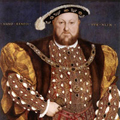
Geoffrey de Villehardouin

The other year after that right worthy man Fulk had so spoken of God, there was held a tourney in Champagne, at a castle called Ecri, and by God's grace it so happened that Thibaut, Count of Champagne and Brie, took the cross, and the Count Louis of Blois and Chartres likewise; and this was at the beginning of Advent (28th November 1199). Now you must know that this Count Thibaut was but a young man, and not more than twenty-two years of age, and the Count Louis not more than twenty-seven.

Then did Henry take council with his barons, and their decision was that they would go to the city of Bizve, which was a fair city, and strong. So they did as they had devised, and came to Bizye, and encamped before the city on the eve of the feast of our Lord St. John the Baptist, in June (23rd June 1206).

A fortnight after came to Zara the Marquis Boniface of Montferrat, who had not yet joined, and Matthew of Montmorency, and Peter of Bracieux, and many another man of note. And after another fortnight came also the envoys from Germany, sent by King Philip and the heir of Constantinople. Then the barons, and the Doge of Venice assembled in a palace where the Doge was lodged. And the envoys addressed them and said: " Lords, King Philip sends us to you, as does also the brother of the king's wife, the son of the emperor of Constantinople.

When the marquis had come to Messinopolis, he did not remain there more than five days before he rode forth, by the advice of the Greeks of the land, on an expedition to the mountain of Messinopolis, which was distant a long day's journey. And when he had been through the land, and was about to depart, the Bulgarians of the land collected and saw that the marquis had but a small force with him. So they came from all parts and attacked the rear-guard. And when the marquis heard the shouting, he leapt on a horse, all unarmed as he was, with a lance in his hand.

Now may you hear of a strange deed of prowess; for the Doge of Venice, who was an old man, and saw naught (seeing he was blind), stood, fully armed, on the prow of his galley, and had the standard of St. Mark before him; and he cried to his people to put him on land, or else that he would do justice upon their bodies with his hands. And so they did, for the galley was run aground, and they leapt therefrom, and bore the standard of St. Mark before him on to the land.

The fleet was very well prepared and armed, and provisions were got together for the pilgrims. On the Thursday after mid-Lent (8th April 1204), all entered into the vessels, and put their horses into the transports. Each division had its own ships, and all were ranged side by side; and the ships were separated from the galleys and transports. A marvellous sight it was to see; and well does this book bear witness that the attack, as it had been devised, extended over full half a French league.

In those days it happened that the Emperor Mourzuphles, whose eyes had been put out-the same who had murdered his lord, the Emperor Isaac's son, the Emperor Alexius, whom the pilgrims had brought with them to that land-it happened, I say, that the Emperor Mourzuphles fled privily, and with but few people, and took refuge beyond the straits. But Thierri of Loos heard of it, for Mourzuphles' flight was revealed to him, and he took Mourzuphles and brought him to the Emperor Baldwin at Constantinople,.

Now will we say no more about those at Constantinople, who were in sore trouble, but go back to the Doge of Venice and Geoffry the Marshal, who marched all the night that they left Adrianople, till the dawn of the following day; and then they came to a city called Pamphyle.

Afterwards the barons held a parliament at Soissons, to settle when they should start, and whither they should wend. But they could come to no agreement, because it did not seem to them that enough people had taken the cross. So during all that year (1200) no two months passed without assemblings in parliament at Compiègne. There met all the counts and barons who had taken the cross.

When Johannizza heard that the Franks were coming, he did not dare to abide, but burned his engines of war, and broke up his camp. So he departed from Demotica; and you must know that this was accounted by all the world as a great miracle. And Henry, the Regent of the empire, came on the fourth day (28th June) before Adrianople, and pitched his cainp near the river of Adrianople, in the fairest meadows in the world. When those who were within the city saw his host coming, they issued forth, bearing all their crosses, and in procession, and showed such joy as had never been seen.

Syndicate content