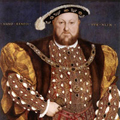
Middle Ages

Now let us leave off speaking of those who were at Philippopolis, and of Renier of Trit, who is shut up in Stanimac, and return to Henry, the brother of the Emperor Baldwin, who had sojourned at Pamphyle till the beginning of winter. Then he took council with his men and with his barons; and they decided to set a garrison in a city called Rusium, which was situate at a place rich and fertile in the middle of the land; and the chiefs placed over this garrison were Thierri of Loos, who was seneschal, and Thierri of Tenremonde, who was constable.

Then the Doge spoke to his people, and said unto them:

Signors, these people cannot pay more; and in so far as they have paid at all, we have benefited by an agreement which they cannot now fulfil. But our right to keep this money would not everywhere be acknowledged; and if we so kept it we should be greatly blamed, both us and our land. Let us therefore offer them terms.

Before this assault began, on the Saturday morning, there came a messenger flying to Constantinople. He found the Emperor Henry in the palace of Blachernae, sitting at meat, and spoke to him thus: "Sire, be it known to you that those at Cibotos are being attacked by land and sea; and if you do not speedily deliver them, they will be taken, and but dead men."

The next day after, the Emperor Alexius sent an envoy with letters to the counts and to the barons. This envoy was called Nicholas Roux, and he was a native of Lombardy. He found the barons in the rich palace of Scutari, where they were holding council and he saluted them on the part of the Emperor Alexius of Constantinople, and tendered his letters to the Marquis of Montferrat-who received them.

The Emperor Alexius remained for a long time on progress, till St. Martin's Day, and then he returned to Constantinople. Great was the joy at his home-coming, and the Greeks and ladies of Constantinople went out to meet their friends in great cavalcades, and the pilgrims went out to meet their friends, and had great joy of them. So did the emperor re-enter Constantinople and the palace of Blachernae; and the Marquis of Montferrat and the other barons returned to the camp.

Then the Emperor Baldwin moved from Constantinople, with all his host, and rode forward till he came to Adrianople. There he found Henry his brother, and the men with him. All the people whithersoever the emperor passed, came to him, and put themselves at his mercy and under his rule. And while they were at Adrianople, they heard the news that the Emperor Alexius had pulled out the eyes of the Emperor Mourzuphles. Of this there was much talk among them; and well did all say that those who betrayed one another so disloyally and treacherously had no right to hold land in possession.

Between the years 1100 and 1500 A.D. the state-system of Europe passed through changes amounting in their sum-total to a revolution. But the changes which endured, whether they affected political boundaries or constitutions, came about by slow instalments. At no stage of the development was there any general cataclysm such as had followed the dissolution of the Frankish Empire, and was to follow the advent of Napoleon.

Neither the internal development of the medieval state nor the international politics of medieval Europe can be explained without constant reference to class distinctions. First, there is a sharp line dividing each state horizontally and marking off the privileged few from the unprivileged many, the rulers from the ruled. Below the line are the traders, artisans, and cultivators of the soil; above it the landlords, the officeholders, and the clergy.

Scattered broadcast over the territory of every medieval state are towns endowed with special privileges, and ruled by special magistrates. Some of these towns - particularly in Italy, Southern France, and the Rhineland - stand on the sites, and even within the walls, of ancient municipia, those miniature Homes which the statecraft of the Empire had created as seats of government and schools of culture.

Syndicate content